

The Ultimate Guide to Guest Article Submission Tips and Best Practices

So, you’ve heard about guest article submission (or “guest posting,” “guest blogging,” whatever flavor you prefer).
Maybe your SEO guy keeps whispering about backlinks in your ear. Maybe you saw someone flexing on LinkedIn like: “Just got published on HubSpot, traffic doubled overnight.” And now you’re thinking—alright, should I be doing this too?
Short answer: yes. Long answer: yes, but don’t screw it up.
Guest posting is like dating. If you come in all desperate, self-promotional, and ignoring the rules, you’ll get ghosted by editors faster than you can hit “send.”
This guide? It’s not the corporate, soulless version. This is the seasoned-writer-who’s-been-rejected-more-times-than-they’d-like-to-admit version.
I’ll give you the real talk: how to find sites, what “submission guidelines” actually mean, and why the New York Times isn’t waiting to publish your half-baked thought piece on “10 Ways AI Will Change Toasters.”
Grab some coffee. Let’s dive in.
Guest Article Submission (What It Actually Means)

Guest article submission is just a fancy way of saying: “Hey stranger, can I put my words on your website?” You write an article, you pitch it, and if the editor likes it, boom—it gets published under your name (with a link back to your own site, if you’re lucky).
Why bother? Because:
Guest article submission isn’t just about blasting out pitches to every blog with a contact form. You need strategy, timing, and a little humility.
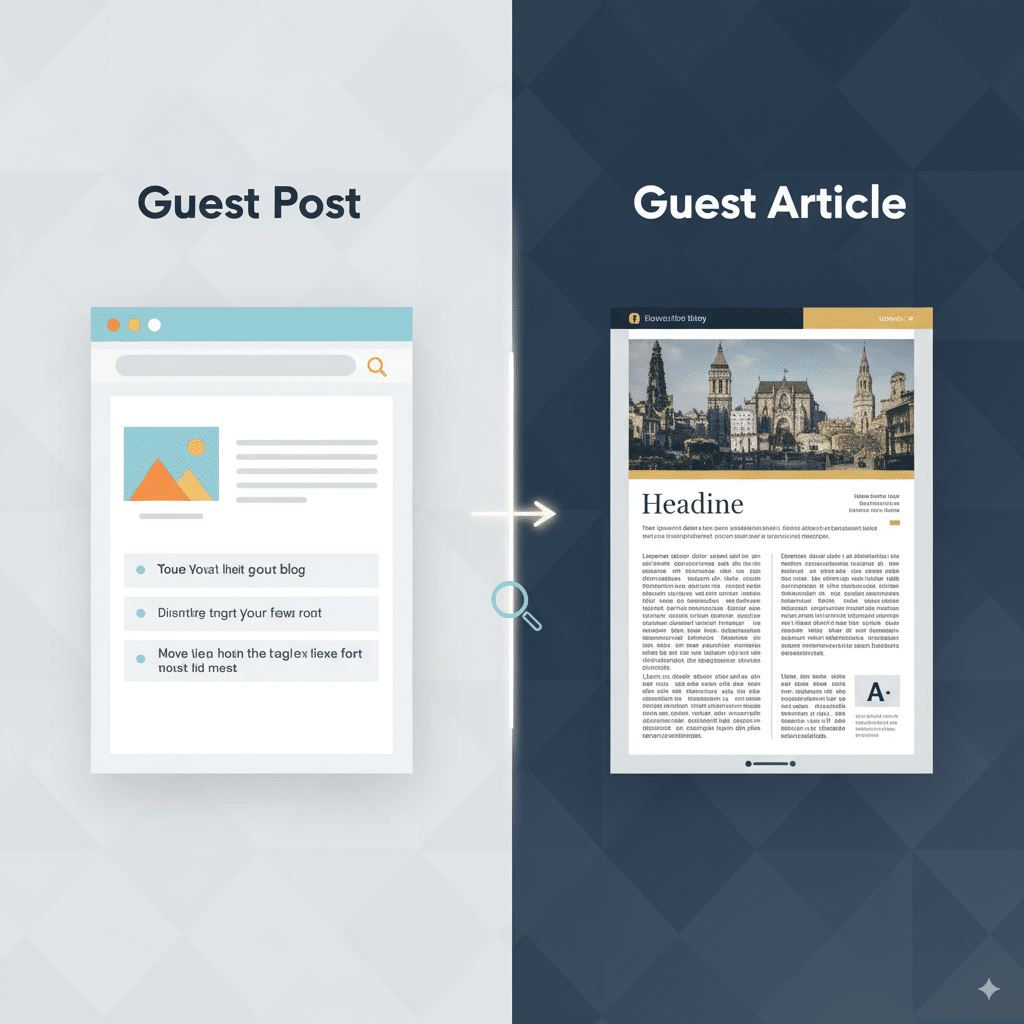
Guest Post vs. Guest Article (Do They Even Care?)
Let’s get this out of the way. People love to split hairs. Some call it guest posts, others say guest articles, and then you have “op-eds,” “editorial submissions,” or “guest essays.” Honestly, editors don’t care what you call it.
So don’t sweat the terminology. Just know where you’re submitting. A casual blog might happily take “7 Ways to Grow Your Email List.” The New York Times Editorial Page? Yeah, you’ll need more than a listicle.
Submission Guidelines (a.k.a. The Rules You’ll Break Once, and Then Learn)
Here’s a universal truth: editors love their submission guidelines, and writers love to ignore them.
But if you want to get published, follow them like your life depends on it. Seriously—nothing makes an editor hit “delete” faster than a pitch that ignores word count or sends a 3,000-word novel where they asked for 800.
What to look for in submission guidelines:
👉 Side note: I once ignored a guideline that said “no links to product pages.” Guess what I did? Linked to a product page. Guess where that article went? The trash. Learn from me.
Guest Essays (When You Wanna Sound Smart)

Not everything is about SEO. Sometimes you just want to sound like a thought leader—or maybe rant about how remote work ruined your attention span. That’s where guest essays come in.
Guest essays = opinion pieces. Think commentary, personal perspective, or analysis on a given topic. These often land in news sites, magazines, or big publications.
You can’t treat essays like blog posts. They need:
The New York Times (Everyone’s Dream, Few Get In)
Let’s talk about the elephant in the room: submitting a guest article to the New York Times.
Yes, they accept them. No, it’s not easy. Here’s the gist:

Their rules are clear: keep it timely, keep it relevant, and don’t pitch them your marketing blog repurposed as an “essay.”
Honestly, unless you have a hot take on politics, culture, or major world events, aim smaller first. Cut your teeth on industry blogs, build a portfolio, then climb the ladder.
How to Submit a Guest Article (Process Without the Fluff)
Basic submission process, boiled down:
- Research sites. Use Google (“write for us” + niche), tools like Ahrefs, or just stalk competitor backlinks.
- Read the guidelines. Yes, actually read them.
- Pitch. Don’t send the full article unless they ask. Pitch an idea first.
- Wait (and wait). Some respond in 2 days, some never. Don’t take it personally.
- Write & edit. Once accepted, follow their editing process. Some want Google Docs with comments, others want HTML-formatted Word files (ugh).
- Submit. Double-check links, formatting, images.
- Promote. When it’s live, share it everywhere. Don’t expect the editor to do all the work.
Pro tip: Always have a one-sentence bio and short bio saved. Editors will ask for it, and you’ll look like a pro if you send it instantly.
Why Guest Posting Works (and Why It Sometimes Sucks)

Guest posting is a grind. Sometimes you’ll land on a site with decent traffic, get a backlink, and see your rankings climb. Other times, you’ll spend hours writing only to land on a blog that hasn’t been updated since 2017.
Pros
Cons
But here’s the thing: when it works, it works. I’ve had guest posts that sent 500+ referral visits in a week, and others that gave me a single backlink that boosted an entire keyword cluster in Google.
Optimizing & Promoting Your Guest Post
Don’t just hit “submit” and walk away. That’s rookie behavior.

FAQs (Because People Always Ask)
Q: How long should a guest article be?
A: Depends. Blogs = 800–1,200 words. Editorials/essays = 1,200–1,800+. Follow the site’s submission guidelines.
Q: Do guest posts always include backlinks?
A: Not always. Some sites “nofollow” links. Still worth it for visibility and credibility.
Q: How long does it take to hear back from editors?
A: Anywhere from three business days (NYT style) to never. Always follow up politely after a week.
Q: Can I republish my guest article on my own website?
A: Usually no. Most sites want unique content. You can, however, repurpose it—turn it into a LinkedIn post, YouTube video, or newsletter.
Q: Do I need to pay to submit?
A: Legit sites? No. Shady ones? They’ll ask for “publishing fees.” Run away.
Final Thoughts
Guest article submission isn’t magic. It’s not a one-and-done tactic. It’s a long game. You write, you pitch, you get rejected, you try again, you finally land a good one, and slowly—brick by brick—you build your online authority.
If you only take one thing away from this guide: respect the editor’s time, follow the damn guidelines, and don’t treat guest posts like free ads.
Do it right, and you’ll build backlinks, brand credibility, and a network of editors who’ll actually want to hear from you again.
