

Originality.ai vs Copyleaks: Which AI Detection Tool is Best?
The No-Fluff Guide to AI Content Detection (With Real Examples) - So, AI’s writing half the internet now…
Let’s be honest—AI-generated content isn’t “the future.” It’s already here. It’s in your inbox, your kid’s homework, maybe even that LinkedIn post you thought was heartfelt but somehow mentioned “synergizing operational workflows” (ugh).
It’s cool in some ways—fast content, unlimited ideas—but also a new headache: knowing when something’s written by a human vs. a machine.
Why should you even care?
- In schools, it’s the difference between a real student and one who let ChatGPT do their homework.
- In marketing, it’s about trust—nobody wants a blog that feels human but was stitched together by a bot with zero life behind it.
- In publishing? We’re talking fake news, plagiarism, disinformation… you get the idea.
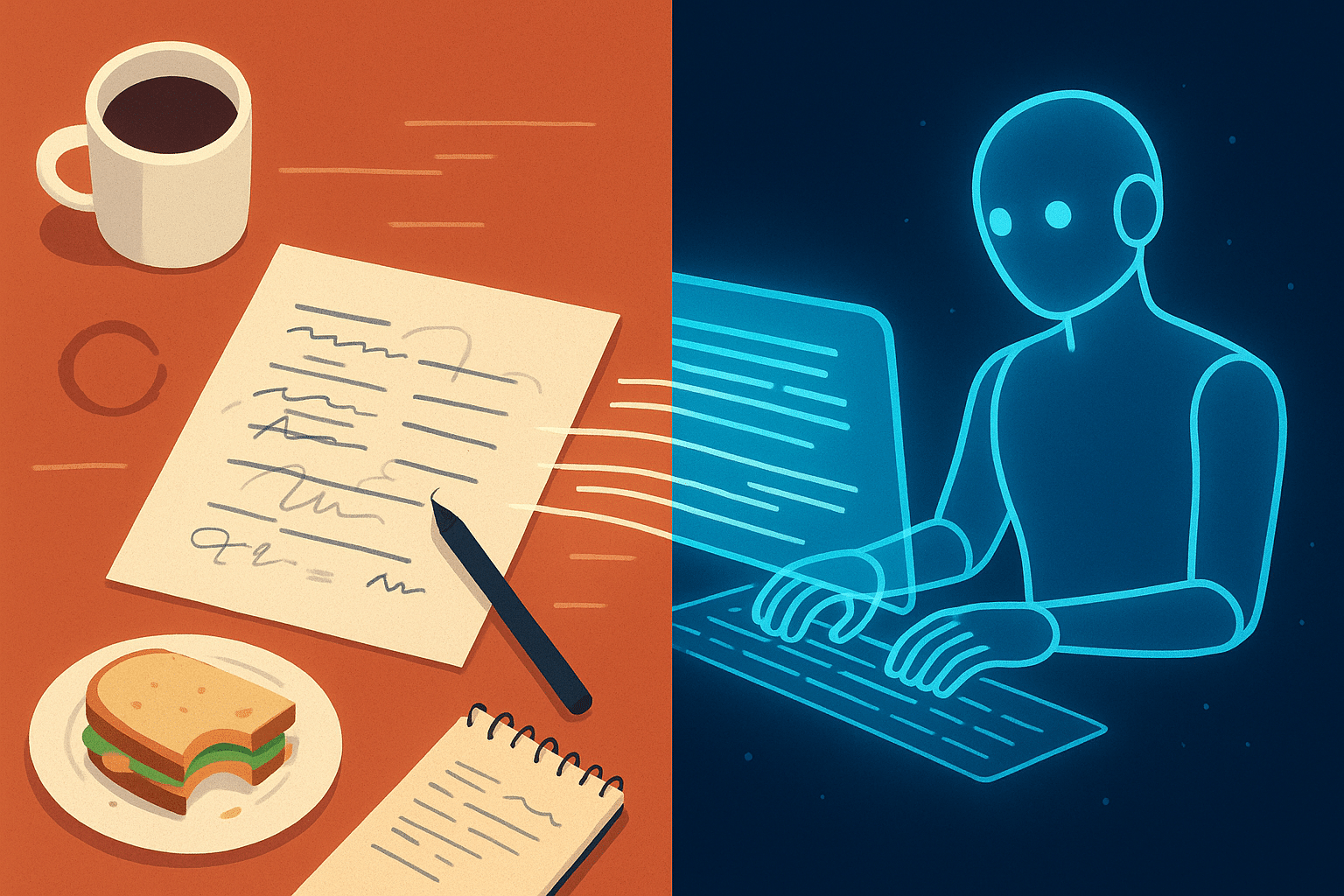
How AI Detectors Actually Work (Without the Buzzword Salad)
Here’s the deal: AI detectors aren’t magic truth machines—they’re just really good pattern hunters. They use natural language processing (NLP) and machine learning to study your text like a detective looking for fingerprints.
They scan the sentence structure, the writing style, the word choices. And here’s the big tell—they’re trained to spot predictable wording and repetitive patterns that machines tend to overuse.
After crunching the data, they spit out a score: “Hey, this looks 85% like AI wrote it” or “Nah, this feels human.” Is it perfect? Nope. Accuracy depends on the AI model they were trained on and the quality of their algorithms.
Most AI detection tools aren’t one-trick ponies. They also throw in:
- Plagiarism checks (because AI can plagiarize without meaning to)
- AI content detection (obviously)
- Human verification (basically saying “yes, this feels real”)
- Browser extensions for quick checks
- Integrations with platforms like Google Docs or Learning Management Systems
- Free versions for light scans (usually capped)
Example: Copyleaks is popular with publishers thanks to its multi-language support. And then there’s Originality.ai, which is basically the bloodhound of GPT-3 and GPT-4 text.
Why This Matters in Content Creation
If you’re a content marketer, editor, or teacher, AI detectors are your filter against:
- Plagiarism (intentional or not)
- AI-heavy “original” work
- Credibility-killing fake news
They let you sleep at night knowing your published work is actually original—or at least, transparently AI-assisted.
Meet the AI bouncer: Copyleaks AI Detector
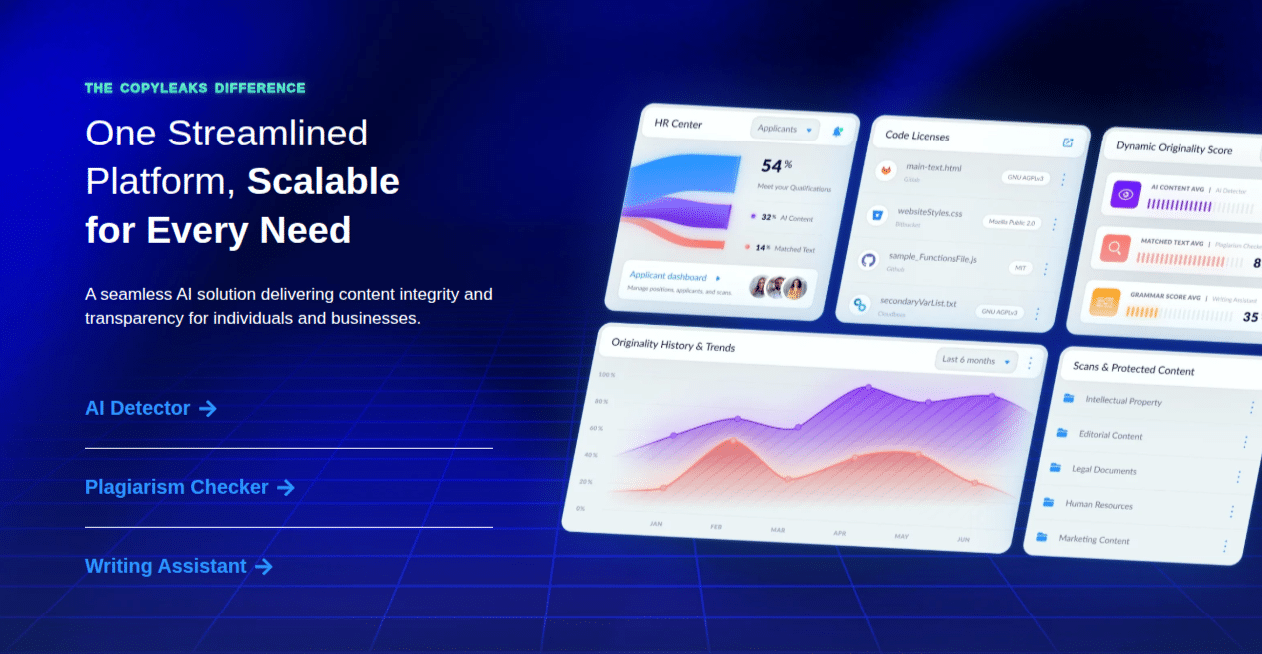
Think of Copyleaks like the bouncer at the club of credible content. It doesn’t just scan and go “Hmm, sounds robotic.” No—it digs into patterns, language quirks, even the way sentences flow.
And the wild part? Even if the AI text’s been dressed up—paraphrased, sprinkled with human edits, or mashed with real writing—Copyleaks can still sniff it out. I’ve tested it myself. Creepy accurate.
Pros & Cons of Copyleaks AI Detector
Pros | Cons |
|---|---|
🔍 Detects AI text even when paraphrased or mixed with human writing | ❌ Paid plans can get pricey for heavy users |
📊 Clear, easy-to-read reports | ❌ Occasional false positives (no detector is perfect) |
🚀 Fast scanning, handles large documents easily | ❌ Needs an internet connection — no offline mode |
🧠 Supports detection for major AI models like ChatGPT, Gemini, etc. | ❌ Interface feels a bit “plain” compared to flashy competitors |
📂 Works with multiple file formats and integrations | |
🏆 Trusted by universities and enterprises worldwide |
My own “gotcha” moment with Copyleaks
A client sent me an article draft last month—swore up and down they wrote it themselves. But the flow was too perfect. My gut said “machine.”
I ran it through Originality.ai first—87% AI. Then I threw it into Copyleaks to see if it agreed—yep, almost identical results, and it highlighted exact AI-pattern-heavy sentences.
Turns out they had pasted the whole thing into ChatGPT and just reworded a few lines. Both tools caught it, but I liked Copyleaks’ breakdown better because it didn’t just give me a score, it explained why.
Meet the AI Lie Detector: Originality.AI

If AI-generated content is the smooth-talking scammer trying to sneak past your editorial gate, Originality.AI is the detective who already has their number.
This isn’t just an “AI yes/no” machine. It’s an AI detection tool that practically interrogates your text — checking its tone, sentence rhythm, and even the “energy” in your phrasing.
And here’s the twist: it doesn’t stop at “Yep, looks AI”. It also doubles as a plagiarism detection tool, so you’re killing two birds with one scan — spotting AI-generated text and stolen lines.
I’ve run some of my own writing through it just to test its paranoia. Let’s just say… it’s a little too good. One time it accused my very human rant about bad coffee of being AI-generated. (To be fair, maybe my caffeine levels were robotic that day.)
Pros & Cons of Originality AI Detector
Pros | Cons |
|---|---|
🔍 High Accuracy – One of the most accurate AI detectors I’ve tested, even against GPT-4 and paraphrased AI text. | ❌ Not Free – Even for a quick test, you’ll need credits. |
📊 Dual Function – AI detection and plagiarism checker in one tool | ❌ Can Flag Over-Edited Human Content – Occasionally calls out “human written” work if it’s too clean. |
🚀 Fast Results – Scans long-form blog posts or reports in seconds. | ❌ Interface is Functional, Not Fancy – It’s about results, not aesthetics. |
🛠 Pay-As-You-Go Pricing – No annoying subscriptions if you don’t need them. | ❌ No Mobile App (Yet) – Desktop is the main game. |
👥 Team Collaboration Features – Perfect for agencies, editors, or multi-writer projects. | |
📂 File Upload & Website Scan – PDF, DOCX, direct URLs… it handles them all. |
My “Oh, it caught me” Moment with Originality.AI
A few months back, I was editing a client’s blog post on “Best SEO Tools”. Something about it just felt… flat. No typos, no odd tangents, no little imperfections that scream “human.” My gut said AI.
I ran it through ZeroGPT first — it came back around 60% AI-generated. Not bad, but I wanted a second opinion.
Enter Originality.AI. Boom — 94% AI, with specific sections flagged as “highly probable machine-written.” It even highlighted transitions that were too smooth. (Apparently, humans aren’t that logical when we write.)
Turns out, the writer had taken ChatGPT output and “humanized” it with a paraphrasing tool. Originality.AI didn’t care. It still spotted the patterns and called it out.
Originality.ai vs Copyleaks - Quick Comparison
Tool | Strengths | Weak Spots |
|---|---|---|
Copyleaks | Multi-language, simple interface, strong on paraphrased text | Paid plans can get expensive |
Originality.ai | Very accurate on GPT-3/4; bulk scanning | No free tier, geared more for pros |
Picking the Right AI Detector — What to Actually Look For
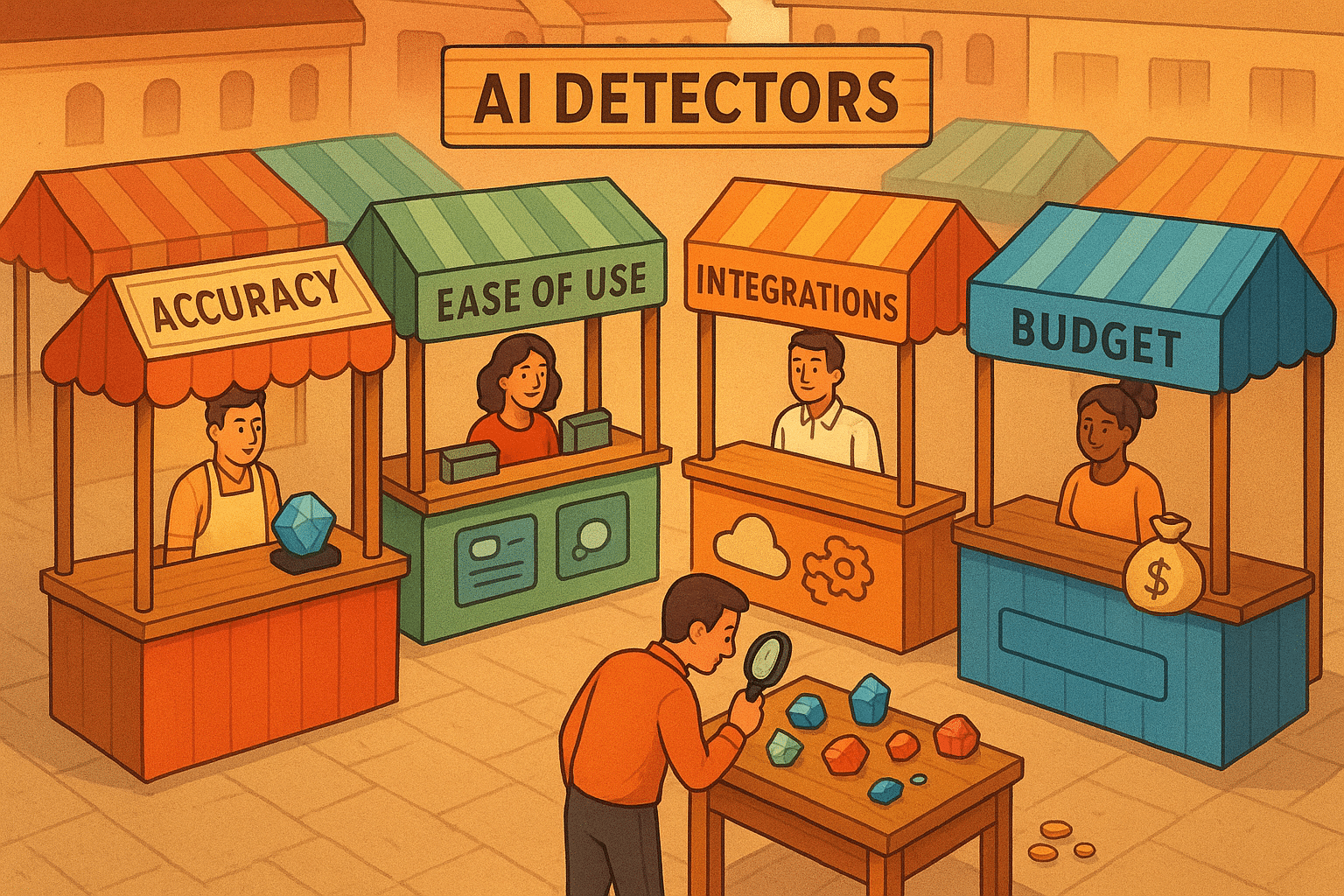
Choosing an AI detector isn’t just “pick the one with the best website.” There’s a lot of smoke and mirrors in this space—vendors will wave around “99% accuracy” claims, but those numbers often come from their in-house tests (on their preferred datasets). You want to stress-test it yourself with real samples from your workflow.
1. Accuracy
- Why it matters: If the detector misses subtle AI rewrites or gives false positives on human text, it’s basically useless.
- What to check: Test it with mixed content—pure human, pure AI, and hybrid (human text + AI edits). If it flags your own writing as AI 50% of the time, walk away.
- Pro tip: Some tools excel with GPT-3/4 detection but lag with other models like Gemini or Claude.
2. Ease of Use
- Why it matters: You shouldn’t need a manual to figure out the interface. If it takes more clicks to scan a file than to write the file, that’s a fail.
- What to check: Is the dashboard intuitive? Can you drop in text or upload docs without 20 steps? Does it give plain-English results or just “synthetic probability scores”?
3. Integrations
- Why it matters: If your work lives in Google Docs, WordPress, or an LMS, you want a detector that works inside those tools—not one that forces you to copy-paste everything.
- What to check: Does it have browser extensions, API access, or native integrations with your stack? Bonus points if it works in multiple languages without choking.
4. Budget
- Why it matters: Scans add up—especially if you’re running large batches for a publication or agency.
- What to check: Look at cost per scan or per 1,000 words, not just the monthly subscription. Some “cheap” tools can become expensive fast at high volume.
Side-by-Side Buyer’s Guide
Feature | Copyleaks | Originality.ai | Winner in my opinion after testing |
|---|---|---|---|
Accuracy | Strong with paraphrased/mixed AI+human text; multi-model support | Very high on GPT-3/4; strong for SEO/content audits | Originality.ai |
Ease of Use | Simple, minimal interface; clear highlight reports | More “pro” looking; requires some getting used to | Copyleaks |
Integrations | APIs, LMS plugins, browser extension, multi-language | API, WordPress integration, bulk uploads | Originality.ai |
Pricing | Free tier + pay-as-you-go; can get pricey for high volume | No free tier; per-scan cost is competitive for big batches | Copyleaks |
AI Models Covered | ChatGPT, Gemini, Claude, mixed content | GPT-3, GPT-4, other major LLMs | Originality.ai |
My Recommendations
- For heavy publishing work? Copyleaks is my pick—multi-language support, paraphrase detection, and integrations make it great for large-scale workflows.
- For deep sniffing on GPT-4 stuff? Originality.ai still has the sharpest teeth in that space. I use it when I’m auditing AI-heavy SEO articles or client submissions.

The Road Ahead
AI will only get better at faking “human.” That means detectors gotta get smarter—better models, deeper analysis, maybe even spotting AI ideas not just AI words.
Right now? Copyleaks is one of the few keeping pace with the madness. If you’re in education, marketing, or publishing, having it isn’t really optional anymore. It’s survival.
FAQS
Is Copyleaks the best AI detector?
It’s one of the most accurate—supported by multiple independent studies. For example:
- In a peer-reviewed study comparing 16 detectors, Copyleaks (alongside Turnitin and Originality.ai) perfectly classified AI vs. human texts with zero false positives or negatives—even on tricky GPT‑4 outputs.
- Another study found it achieved 100% accuracy on English texts (and 95% on Swedish), maintaining zero human-written false positives.
- Its own claims (backed by research) suggest over 99% accuracy with a false positive rate of just 0.2%.
- A Reddit user noted that Copyleaks “has far fewer false positives and produces more detailed reports” than Turnitin.
So, while “best” always depends on your needs, it’s absolutely a top-tier, consistently reliable option.
Is Originality.ai the most accurate?
Originality.ai is frequently praised for precision—especially in advanced tests:
- In the RAID benchmark, it scored around 85% accuracy (at a 5% false positive rate) and outperformed other tools in detecting paraphrased AI content with 96.7% accuracy.
- Other sources cite 98.2% accuracy on ChatGPT content and an average of 85% across 11 AI models, leading in adversarial detection in 9 of 11 tests.
- It’s also ranked “most accurate” across multiple third-party studies.
- Users on Reddit–and some side-by-side tests—report 99%+ accuracy and low false positives.
So yes— is often the most accurate, especially for pure AI detection and paraphrase-heavy content.
What’s the most trusted AI checker?
Trust depends on transparency, consistency, and independent backing—not just marketing hype.
- Copyleaks has serious academic validation, integrates well in institutions, and reliably flags tricky content—even when paraphrased or translated.
- Originality.ai similarly shows up at the top in many benchmarks, especially for adversarial resilience.
- Winston AI, according to its own site, claims “unmatched accuracy” across ChatGPT, Gemini, and more.
- Independent reviews (like G2) favor Originality.ai’s detection performance but list Copyleaks higher for API integration and flexibility.
- A Tom’s Guide test actually crowned GPTZero the winner for balanced detection—though its consistency can vary depending on input style.
So, the “most trusted” tool varies—Copyleaks and Originality.ai have strong reputations in academia and publishing, Winston AI markets broad model coverage, and GPTZero wins some hands-on tests.
How accurate is Copyleaks compared to Turnitin?
Here’s how the two stack up:
- In academic circles, Turnitin is known as the plagiarism-detection titan—its AI detection feature is still new and its accuracy has been debated.
- In one comparison, users on Reddit said they were switching from Turnitin to Copyleaks, noting Copyleaks had fewer false positives and far more detailed analysis.
- A study found Copyleaks had 93% sensitivity at detecting GPT‑4 text, while still managing to reduce false positives.
- Another direct evaluation of 16 tools (including both) showed that Copyleaks and Turnitin were the only two that perfectly identified all documents (AI and human) with zero false positives or negatives.
That said, while Turnitin brings the legacy of academic rigor, Copyleaks seems to edge ahead—especially in transparency, newer model detection, and fine-tuned accuracy.
Quick Summary Table
Question | Short Answer |
|---|---|
Is Copyleaks the best? | One of the best—top results in multiple studies, especially strong on paraphrased and multilingual content. |
Originality.ai most accurate? | Often, yes—especially in benchmarks and adversarial tests. |
Most trusted? | Depends on context—Copyleaks and Originality.ai lead in credibility, Winston AI boasts wide model support, GPTZero wins some real-world tests. |
Copyleaks vs Turnitin accuracy? | Copyleaks generally performs better in real-world tests; both did perfectly in one study, but Copyleaks offers better transparency and adaptability. |
