

The Best NFC Badge Solutions for Enhanced Engagement and Security
Why Are We Still Handing Out Paper Badges in 2025?

You know what blows my mind? We’ve got self-driving cars, AI writing half the content you read online (oops, did I say that out loud?), but you still walk into an event and they hand you a paper badge with your name printed in size 8 Arial. Like… really? Especially when traditional identification methods are still in use.
That’s where the NFC badge comes in. Sleek. Smart. Basically a business card and an access key had a baby, and now it’s running around events making networking way less awkward.
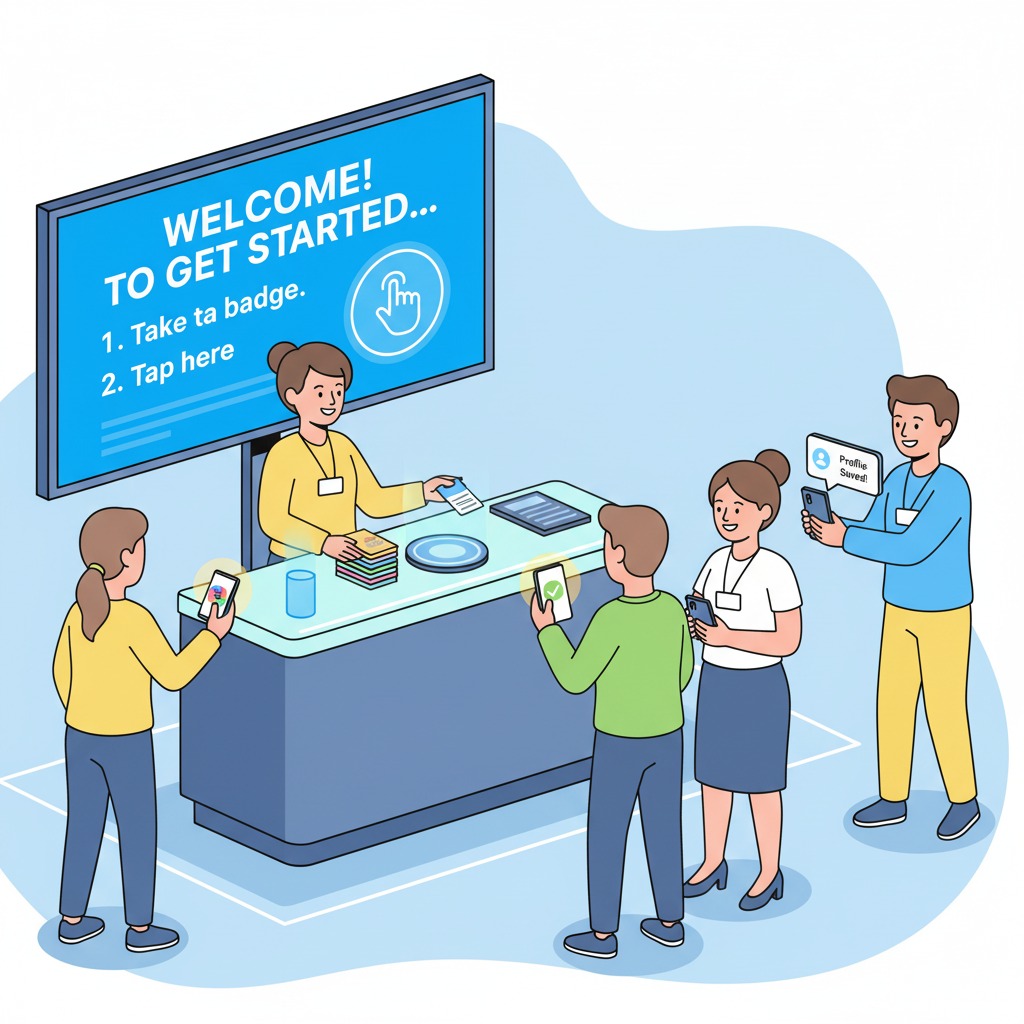
Tap your badge to someone’s phone? Boom — contact saved. Walk up to a secure door? Tap again. No fumbling with QR code screenshots that don’t scan because your screen brightness is too low, unlike the seamless interaction with nfc devices .
So yeah — if you run events, do business networking, or just hate wasting paper (save the trees, people 🌳, and prefer using mobile wallets instead. ), then NFC badges are your new best friend. Let’s dig into what they are, how they work, and the best ways you can use them without screwing it up.
What is an NFC Badge Anyway?
An NFC badge is basically a card (plastic, PVC, or even fancy wood if you wanna show off) that has a tiny NFC chip embedded in it. That chip stores data storage — could be your contact info, event credentials, or a link to your digital business card.
When you tap it against an NFC-enabled device, specifically nfc enabled smartphones (like pretty much every modern iPhone or Android), the info transfers instantly. No apps. No Bluetooth pairing. No WiFi. Just a quick tap using near field communication — tech that’s been around for a while but is finally being used beyond payments.
Side note: if you’ve ever tapped your phone on a payment terminal to buy coffee with Apple Pay or Google Pay, congrats — you’ve already used NFC.
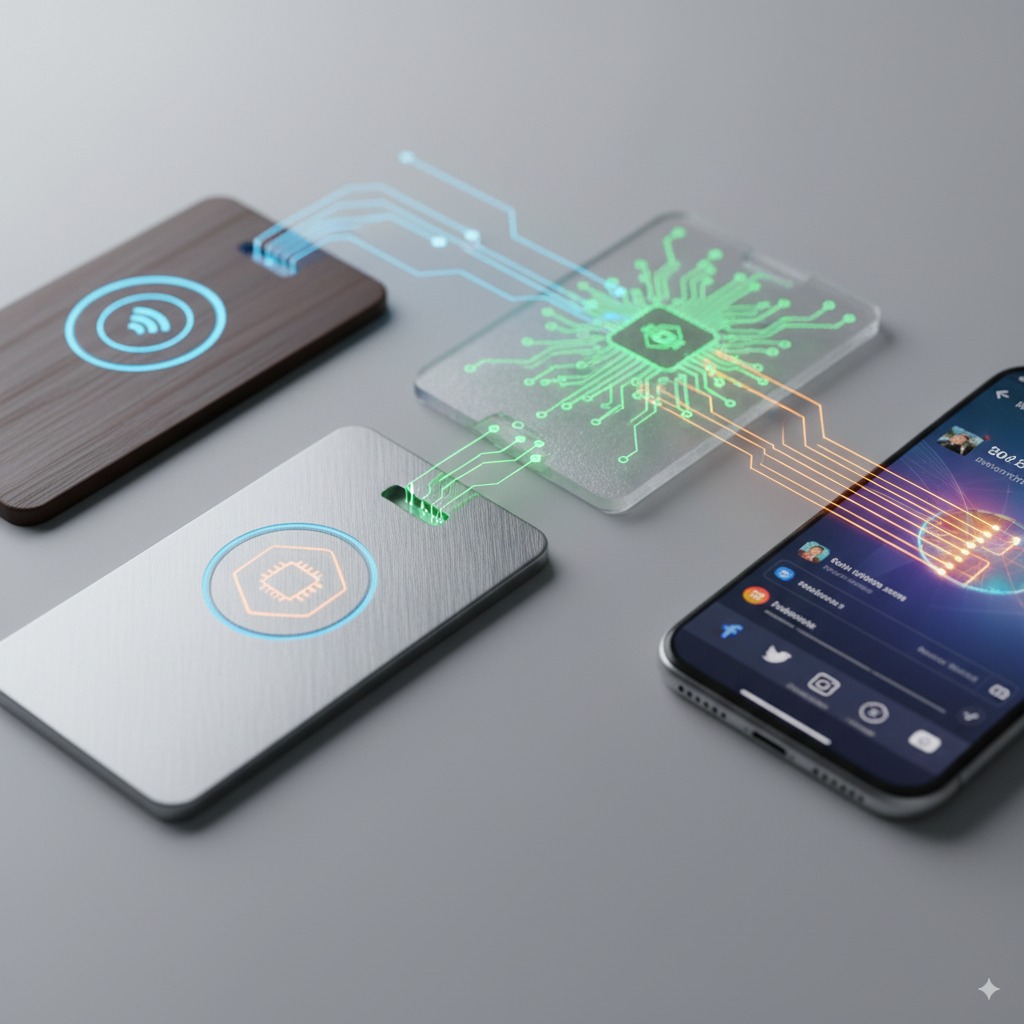
NFC Chip – The Tiny Brain Inside the Badge
Inside every NFC badge is an NFC chip. Think of it as a little memory stick without the USB port. It doesn’t need batteries. It gets power when you bring it close to a reader (thanks to magnetic induction).
A chip can store data in NDEF (NFC Data Exchange Format), which is just a fancy way of saying “the info is saved in a way that your phone understands instantly.”
Different NFC chips have different memory capacities. Some only hold a few bytes (like a website link), while others can store up to 32KB (basically enough to cram in your life story if you really wanted to).
👉 The popular ones for event badges? NTAG213, NTAG215, and NTAG216 — because they’re reliable, cheap, and phones actually like reading them.
NFC Tags: How the Magic Works
Okay, so technically your badge is an NFC tag. It’s a passive device (meaning it doesn’t do squat until it gets tapped). Your phone (or reader) is the active one.
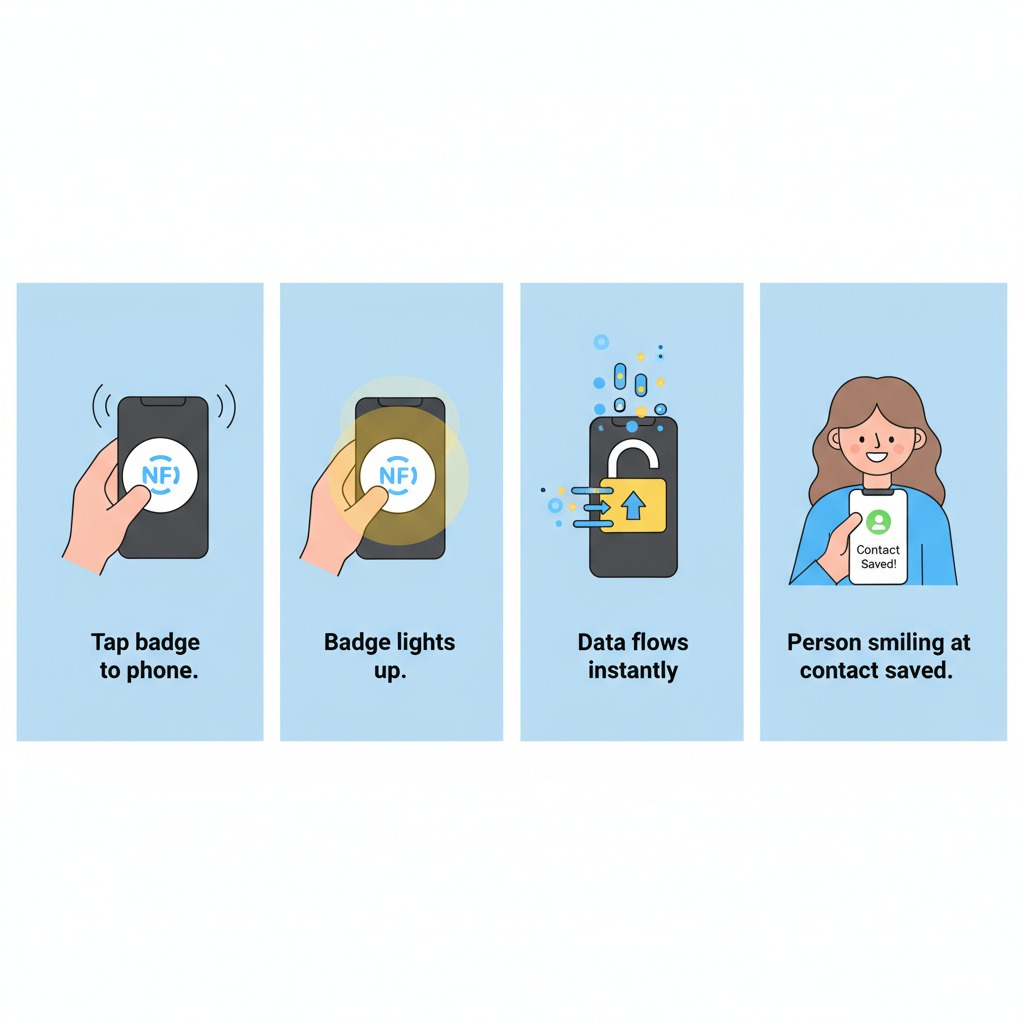
Here’s the play-by-play:
You tap your badge to a phone.
The badge “wakes up” because of the radio waves from the phone.
Data transfers — a link, your contact card, whatever you stored.
The other person goes “whoa, that was slick.”
And just like that, you didn’t have to say, “Sorry, my LinkedIn QR code isn’t loading.”
NFC Readers: Not Just Phones
Phones are the obvious NFC readers, but at events, you’ll also see dedicated readers. These are little devices (or kiosks) that scan badges for:
This is where event organizers really start drooling because NFC badges aren’t just cooler — they’re data goldmines.
NFC Payments (Because Why Carry Cash?)
One of the OG uses of NFC is payments. You know this. Apple Pay, Google Pay, Samsung Pay — all NFC. And yes, NFC badges can be tied to payment systems at events, making contactless payments a breeze .
Imagine: instead of juggling cash for overpriced beers at a music festival, you just tap your badge. Done. Faster lines. Fewer drunk people dropping $50 bills.
Quick warning though: make sure your NFC payment solution uses proper encryption and tokenization. Otherwise, you’re basically handing your credit card details to anyone with a sketchy reader.
Access Control with NFC Badges
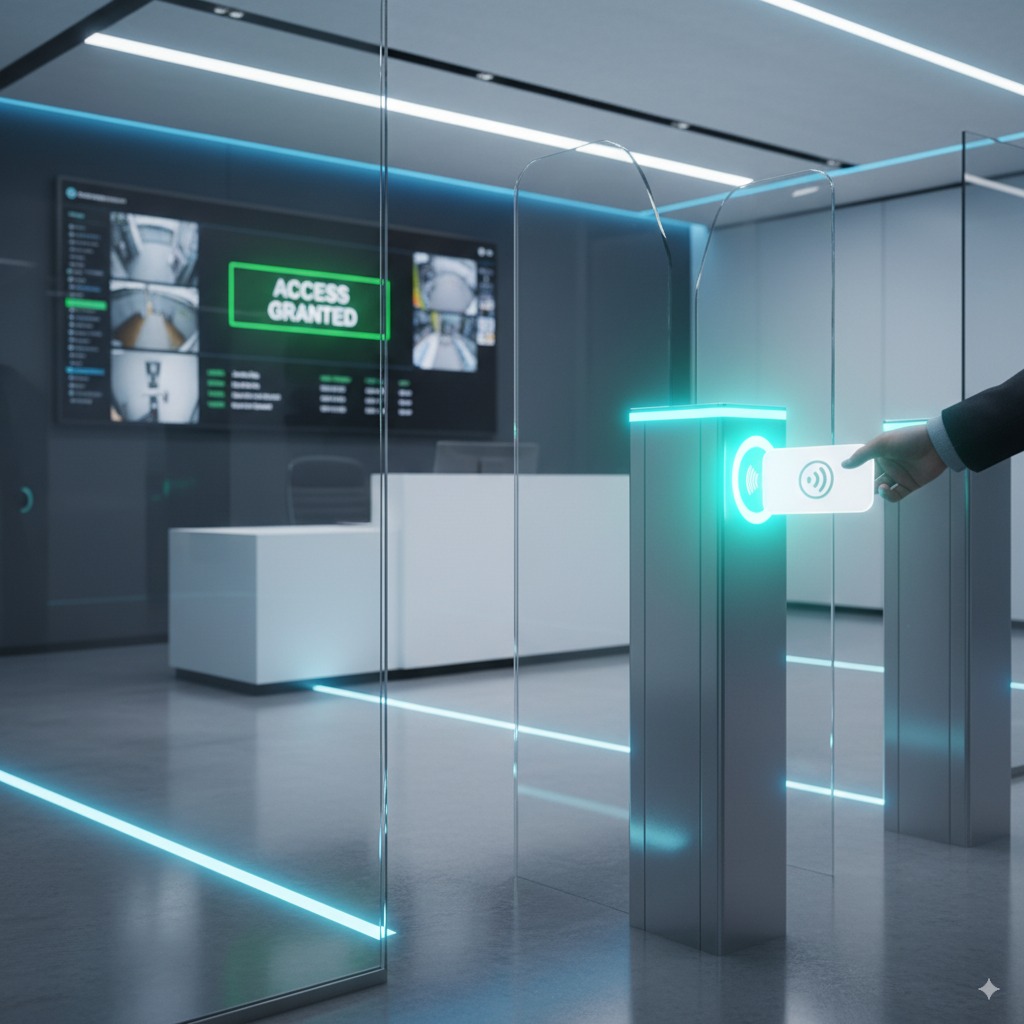
This one’s huge for corporate offices and events. Instead of old-school plastic swipe cards (that wear out, break, or worse — get cloned), leveraging rfid technology is a smarter choice. NFC badges are harder to copy and way easier to manage.
If you’ve ever worked at a company where your badge randomly stopped working and you were locked outside in the rain, well, that’s on IT — but NFC at least makes fixes faster.
The Benefits (aka Why You Should Care)
Let’s break it down:
The Downsides (Because Nothing’s Perfect)
Best NFC Badge Solutions (The Actual Meat)
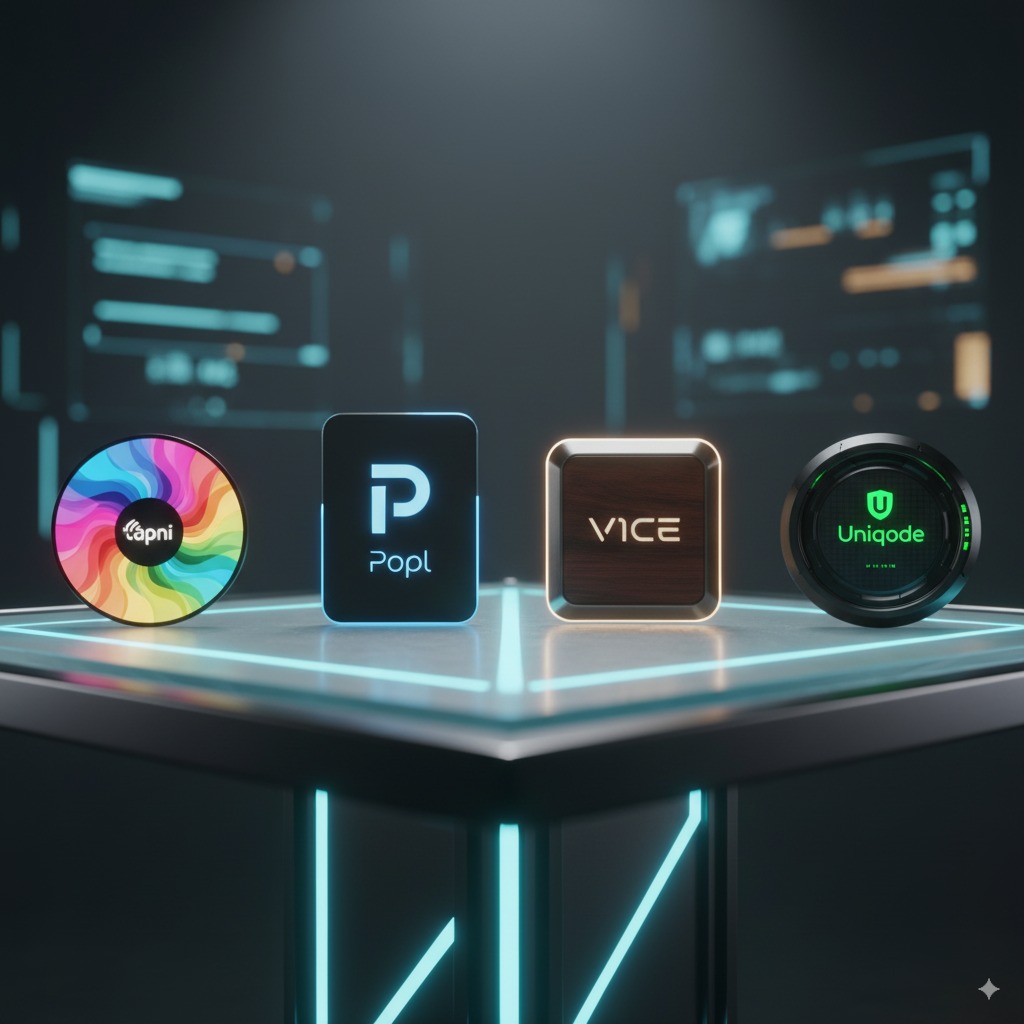
Alright, enough theory. You want names. Who’s doing NFC badges right? Here are a few solid options:
1. Tapni – Sleek & Customizable
👉 Check them out: tapni.com
2. Popl – The Popular Kid
👉 More here: popl.co
3. V1CE – Premium Vibes
👉 Explore: v1ce.co
4. Uniqode (formerly Beaconstac) – Enterprise Beast
👉 Details: uniqode.com
Best Practices for Using NFC Badges
FAQs About NFC Badges
Q: Do NFC badges need charging?
Nope. They’re passive. The reader (your phone) powers them when tapped.
Q: Can someone steal my info by walking near me?
Not really. NFC only works within a few centimeters, unlike an rfid reader which can be less precise . Unlike RFID, it’s not easily skimmed from a distance.
Q: What happens if I lose my badge?
You can usually deactivate it remotely (if it’s tied to an event platform). For static data (like just a website link), well… change your URL.
Q: iPhone users always complain NFC doesn’t work. True?
Kinda. iPhones only auto-read certain chip types. But most modern NFC badges (like NTAG213/215/216) work fine.
Q: Are NFC badges expensive?
More than paper, yes. But bulk pricing makes them manageable for events, especially when they can be customized . And the ROI (data + branding) pays off.
Wrapping It Up: Are NFC Badges Worth It?
Here’s my two cents: yes. If you’re hosting events, running networking meetups, or just tired of paper waste, NFC badges are a game-changer. They save time, make you look cutting-edge, and give you analytics that paper badges never could, which showcases how nfc tags work .
Are they perfect? Nah. They’re not dirt cheap, and you’ll still deal with the occasional “Wait, how do I scan this?” moment. But compared to juggling crumpled paper name tags? I’ll take NFC every time.
So if you’re planning your next big event… maybe skip the lanyard printers and get on board with NFC.
Because nothing says “future of networking” like tapping a badge and instantly landing in someone’s contacts.
