

Mastering LLM SEO: Top Strategies for Enhanced Online Visibility
In 2025, traditional SEO—you know, the whole keyword rankings, backlinks, and on‑page signals thing—is still super relevant, but honestly? There's this whole other layer that's taken the spotlight: LLM SEO. This bad boy targets content discoverability within AI platforms like ChatGPT, Gemini, and Google's AI Overviews, and trust me, it's a game-changer.
This guide breaks down all the changes and gives you practical strategies for crushing it in both worlds. Let's dive in!
What is Traditional SEO?
Alright, so traditional SEO is basically the tried‑and‑true approach we've all been using to optimize web content so it ranks higher in search engines like Google and Bing. The core stuff includes:

Look, this approach has been effective for decades, no doubt about it. But now? It's competing with AI-generated answers that can totally bypass the need for clicks and traditional rankings. Crazy times, right?
What is LLM SEO?
So here's the thing - LLM SEO is absolutely crucial for digital marketing these days. It's all about optimizing content for large language models (LLMs) and traditional search engines at the same time.
Also goes by AI SEO, AEO (Answer Engine Optimization), GEO (Generative Engine Optimization), or LLMO (Large Language Model Optimization). Yeah, lots of acronyms, I know!
Generative engine optimization is seriously key for LLM SEO - it's all about improving content visibility in AI-driven search results.
Why Now?
Comparing LLM SEO vs Traditional SEO
Aspect | Traditional SEO | LLM SEO (LLMO/GEO/AEO) |
|---|---|---|
Goal | Rank in SERPs | Appear in AI-generated answers and citations |
Metrics | Rankings, traffic, CTR | Citation frequency, snippet mentions, referral lift |
Content Style | Keyword-targeted, backlink-driven | Conversational, structured, semantically rich |
Signal Source | Keywords, backlinks, meta tags | Structured data, Q&A formats, entity mentions |
User Behavior | Click-to-visit | Voice/Ambient AI, instant answers |
Optimization Tools | SEMrush, Ahrefs, Google Search Console | AI EngineBoost, Revere.ai, Answer EngineBoost |
LLM Optimization Strategies
Large language model optimization (LLMO) is all about strategies to make sure your content gets processed correctly by LLMs. This increases relevance in AI-generated search results, and honestly? It's super important.
Answer engine optimization is a huge part of LLMO - it focuses on giving direct answers to what users are actually asking.
Structured data and semantic HTML are absolutely essential for LLM optimization. They help AI systems understand your content context and relevance, which is basically everything these days.
Digital PR and Brand Visibility
Digital PR plays this massive role in boosting brand visibility. Brand mentions and online reputation management? Total game-changers.
Google's Knowledge Graph is seriously critical for digital PR - it helps establish brand authority and recognition like nothing else.
Creating high-quality, relevant content is just essential for improving brand visibility and online reputation. No shortcuts here, folks!
Google's Knowledge Graph and LLM Optimization
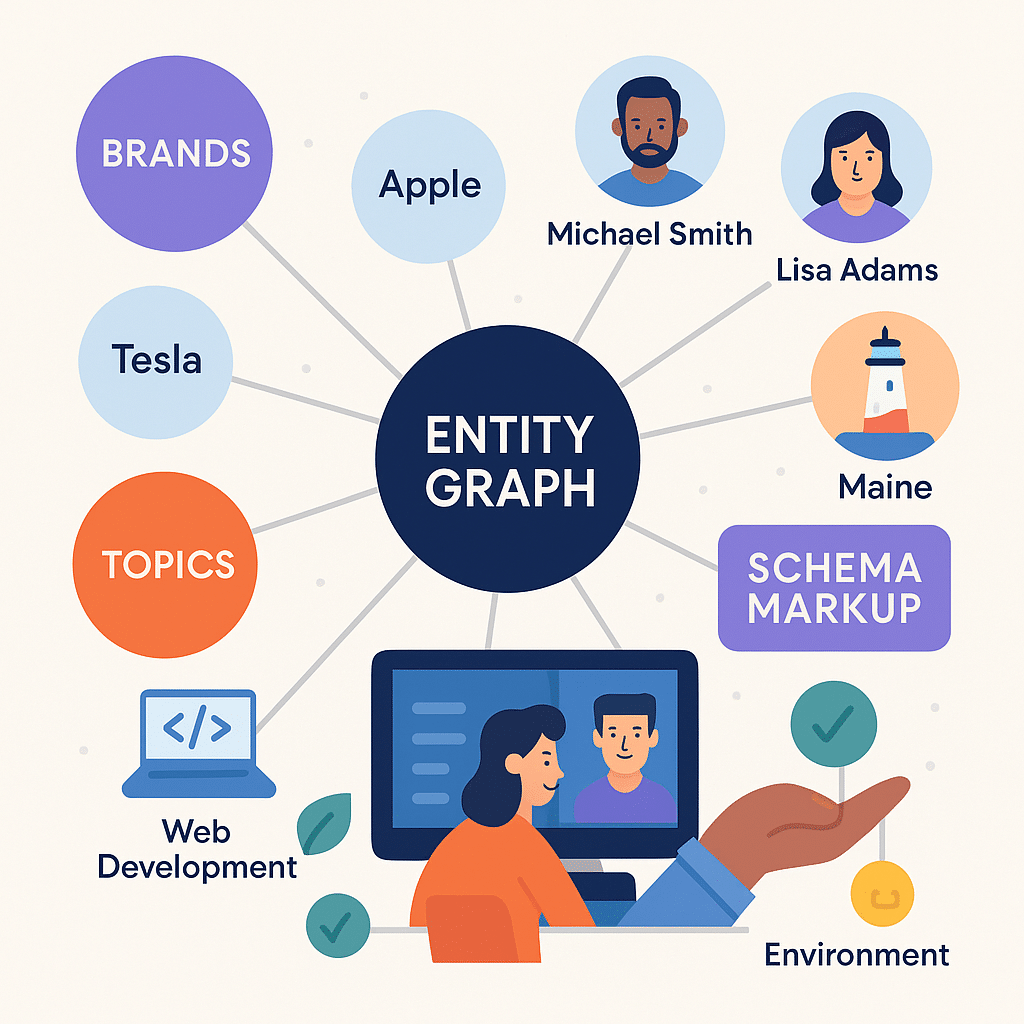
Google's Knowledge Graph is basically this knowledge base that helps LLMs understand entities and their relationships. It's all about improving search results, and it works.
Optimizing content for Google's Knowledge Graph is absolutely essential for LLM optimization. Schema markup and internal links? Those are your best friends.
Entity-based optimization is critical for LLM SEO - it's all about focusing on relevant entities and how they relate to each other.
Generative Engine Optimization
Generative engine optimization (GEO) is this strategy that specifically targets optimization for generative AI search engines. Pretty cool stuff.
GEO uses tactics like authoritative language, structured data, and digital PR to build trust with AI systems. Trust me, this works.
Classic search engines are evolving to incorporate GEO, totally changing how content gets optimized and ranked.
AI Overview and LLMs
AI overviews are basically summaries of content provided by LLMs. They're designed to give users a comprehensive understanding of topics without all the clicking around.
LLMs use AI overviews to provide direct answers to user queries, which reduces the need for multiple clicks. Users love this!
Optimizing content for AI overviews is essential for LLM SEO. Conversational keywords and natural language queries are absolutely key here.
AI Responses and Conversational Keywords

AI responses get generated by LLMs to answer user queries, and conversational keywords play this huge role in optimization. Can't stress this enough.
Natural language queries are becoming super important - exact keyword matches are becoming way less relevant than they used to be.
AI tools are essential for LLM optimization. They help analyze and improve content for AI responses, which is honestly where the magic happens.
AI Tools for LLM Optimization
AI tools are absolutely critical for LLM optimization. They provide insights and analysis to improve content relevance and visibility, and trust me, you need these.
Google Search Console and Google Analytics are essential tools for tracking LLM performance and optimizing content. These are your bread and butter.
AI platforms are evolving to incorporate LLMs, changing how content gets optimized and ranked. It's pretty exciting stuff!
AI Platforms and LLM Integration
AI platforms are integrating LLMs to improve search results and user experience. Google Gemini is a perfect example of this in action.
LLM integration is totally changing how content gets optimized - there's this big focus on conversational keywords and natural language queries now.
Web content absolutely must be optimized for LLMs to improve visibility and relevance in AI-driven search results. No way around it.
Brand Mentions and Online Reputation
Brand mentions are seriously critical for online reputation. Tracking brand mentions is essential for LLM SEO success.
Large language models (LLMs) are influencing brand visibility in huge ways. Brand recognition and reputation management are key factors you can't ignore.
Digital PR is essential for managing online reputation. Schema markup and internal links are key strategies that actually work.
Engine Optimization for LLM SEO

Engine optimization is critical for LLM SEO, with this big focus on conversational keywords and natural language queries. This is where the future is heading.
Traditional SEO performance is still important, don't get me wrong, but LLM SEO requires a totally different approach. It's all about AI-driven search results now.
Search behavior is changing big time - users expect direct answers and comprehensive content from AI search engines. We gotta adapt!
Future-Proofing Your LLM Strategy
Future-proofing your LLM strategy is absolutely essential. You gotta focus on evolving AI technologies and changing user behavior - no choice here.
LLM optimization requires continuous monitoring and improvement. It's all about relevance, context, and user intent, and honestly? It never stops.
Staying up-to-date with the latest LLM trends and technologies is critical for maintaining a competitive edge in digital marketing. The landscape changes fast!
Measuring LLM Success
Measuring LLM success means tracking brand mentions, online reputation, and LLM visibility across platforms. Gotta know where you stand.
Google Search Console and Google Analytics are essential tools for tracking LLM performance and optimizing content. These are non-negotiables.
LLM visibility is critical for digital marketing success. It's all about relevance, context, and user intent - the holy trinity!
LLM Visibility Across Platforms
LLM visibility is critical across multiple platforms - Google, Bing, and other search engines. You can't just focus on one anymore.
Brand recognition and reputation management are key factors in LLM visibility. Digital PR plays this crucial role you can't ignore.
Optimizing content for LLMs requires focus on conversational keywords, natural language queries, and structured data. It's a whole different ballgame!
Integrating Traditional SEO with LLM SEO

Look, these strategies totally complement each other and should work in harmony. Here's how to make it happen:
Technical foundation: Make sure you've got speed, mobile-friendliness, and crawlability locked down. The basics still matter!
Keyword SEO: Keep using SEM tools to capture long-tail and transactional queries. Don't abandon what works.
Structure & Schema: Align everything for both search engines and AI parseability. Two birds, one stone!
Content layering: Combine keyword-rich hub pages (for traditional rankings) with Q&A sections (for AI). Best of both worlds.
Backlinks + brand citations: Build authority both for search ranking and LLM reference. Double the impact!
AI analytics: Use tools like Revere.ai to track where your brand appears in AI responses. This is pure gold.
Actionable 2025 Roadmap
Alright, here's your step-by-step game plan:
Audit: Check your technical, content, and structured data health. No skipping this step!
Update content: Add Q&A sections, schema markups, and concise summaries. Make it AI-friendly.
Publish rich assets: Charts, tables, whitepapers for easier AI citation. Give the AIs something to work with!
Digital PR: Syndicate content to high-authority sources. Get those mentions!
Track brand AI presence: Use AI analytics platforms. Know where you stand.
Re-optimize high-value pages quarterly. Keep it fresh and relevant.
Follow emerging AI SEO tools (Revere.ai, Answer EngineBoost). Stay ahead of the curve!
Conclusion
Look, LLM SEO is absolutely critical for digital marketing these days. It requires this focus on conversational keywords, natural language queries, and structured data that's totally different from what we're used to.
Optimizing content for LLMs needs a different approach than traditional SEO - it's all about AI-driven search results and user intent now. The game has changed, folks!
By following best practices and staying up-to-date with the latest LLM trends and technologies, businesses can seriously improve their online visibility and stay competitive in this evolving digital landscape. Trust me, if you stick with it and keep pushing through, you'll see results. It might take time, but it's totally worth it!
P.S.: If you read through all this, thank you! 🙂 I believe you've got what it takes to crush it with LLM SEO!
