

Top Techniques of Search Engine Optimization for Increased Visibility
Why SEO Still Isn’t Dead (and Why You Should Care)

Every couple of years, someone declares: “SEO is dead.” And then, like clockwork, they launch a $1,500 “TikTok for Business” course. 🙄
SEO isn’t dead. It just evolves. Like Pokémon. Remember when keyword stuffing worked? Or when building 10,000 directory links made you king of page one? Yeah, not anymore.
Now SEO is a mix of science, psychology, and patience. You need to understand search engines, crawl bots, ranking factors, and—most importantly—what actual humans want when they type stuff into that little Google search bar.
So, let’s not waste time. Let’s walk through the top techniques of SEO—the ones that’ll actually give you visibility in 2025 and beyond (and not get you penalized).
(Side note: If you’re looking for quick hacks, sorry. SEO is not instant noodles. It’s slow-cooked stew. Takes time, smells weird halfway through, but damn, the end result is worth it.)
Techniques of Search Engine Optimization
Okay, fancy headline. But what are we really talking about?
SEO techniques = the methods and tactics that get your site ranking higher in the search engine results pages (SERPs). Some are obvious (hello, keyword research). Others are a bit more geeky (technical SEO, schema markup). And some are just plain “keep Google happy or else.”
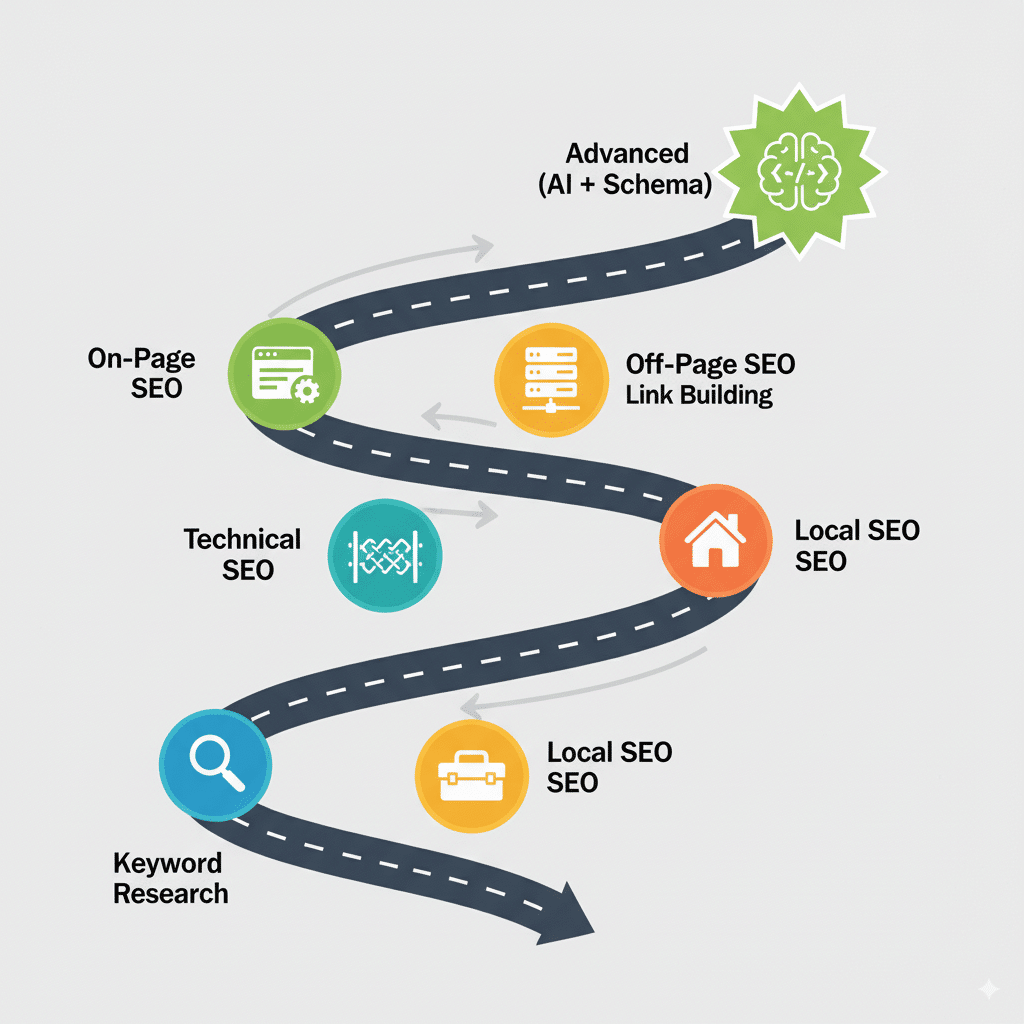
We’ll go through these chunk by chunk:
Search Engines basics
Keyword Research
On-Page SEO
Technical SEO
Off-Page SEO
Content creation + marketing
Link building & outreach
Local & International SEO
SEO tools & tracking
Advanced stuff (AI, schema, etc.)
Search Engines: How the Machine Thinks
If you don’t know how search engines work, you’re basically trying to cook without knowing how an oven heats up.
Search engines (Google, Bing, even DuckDuckGo if you’re niche) crawl your website with bots. They read your web pages, understand your site structure, and then decide if your content deserves to show up when someone searches.

The important thing: search engines don’t just want keywords anymore. They want relevance + authority + user satisfaction.
If you want the real technical breakdown, check out Google’s own doc on how search works.
(Side note: Yes, you can try to “game” search engines. But they’re way smarter than you think. Google employs literal PhDs. You’re not outsmarting them with a Fiverr backlink package.)
Keyword Research: Still the Heart of SEO
Keywords are not dead. They just grew up.
Back in the day, you’d shove “best pizza New York” 40 times on a page and rank. Now? Google’s like, “Relax. Use synonyms. Answer the damn question.”
So here’s how I approach keyword research:
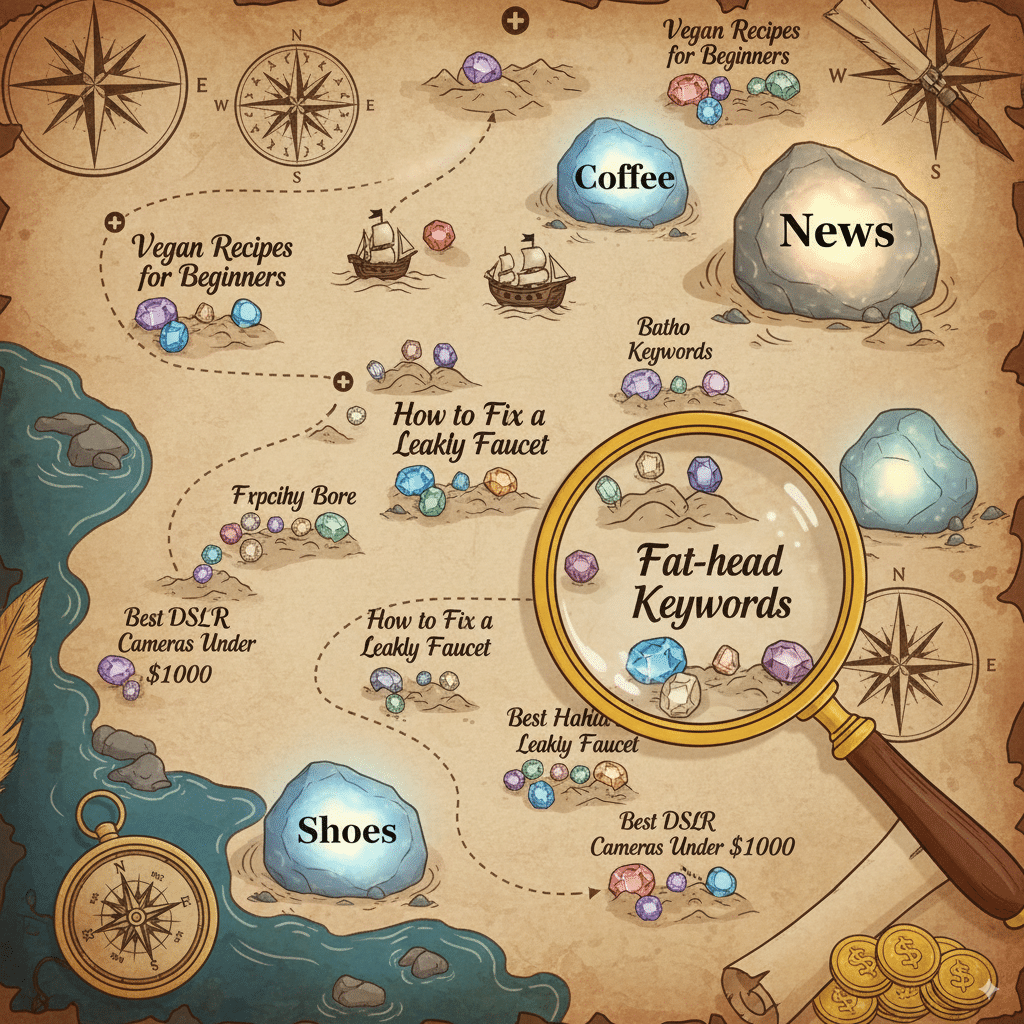
Pro tip: Don’t ignore long-tail keywords. Ranking for “SEO” is impossible unless your name is Moz. But “techniques of search engine optimization for local businesses” = much easier.
(Side note: I once spent 3 weeks trying to rank for a single fat-head keyword. Gave up. Focused on long-tails. Traffic doubled in 2 months. Ego hurt, wallet happy.)
On-Page SEO: The Basics People Still Mess Up
On-page SEO = everything you do inside your website to make it Google- and user-friendly.
Here’s the checklist:
(Side rant: Stop keyword stuffing. It’s 2025. Google can smell it from a mile away. Write naturally. Sprinkle keywords like salt, not like a toddler pouring sugar into cereal.)
Technical SEO: The Geeky but Crucial Stuff
This is the part most small businesses ignore… until their site loads slower than a Windows XP computer.
Technical SEO makes sure search engines can crawl and index your site efficiently.
Main things to check:

(Side note: Technical SEO feels boring until you fix a crawl error and suddenly rank. Then you’re like, “Oh damn, that actually worked.”)
Off-Page SEO: Building Reputation Outside Your Site
On-page makes you look good. Off-page makes you look credible.
The biggest part of off-page SEO? Backlinks. But we’ll get to that later.
Other off-page stuff includes:
Off-page is basically PR for SEO. Build trust, get talked about, and the rankings follow.
High-Quality Backlinks: Still the King
Links are still one of the top ranking factors. But not all links are created equal.
Relevant sites > random sites.
(Side rant: Stop buying 100 backlinks for $5. That’s like buying 100 sushi rolls from a gas station. Cheap, sure, but you’ll regret it.)
If you want a deep dive, read Search Engine Journal’s backlinking guide.
Broken Link Building: Underrated but Effective

This is a fun one. You find broken links on other websites, then politely email the site owner like:
“Hey, your page is linking to a dead resource. I wrote something similar—want to link to mine instead?”
It’s like recycling but for SEO. Everyone wins.
Anchor Text: Don’t Overdo It
Anchor text (the clickable words in a link) matters. But if every backlink says “best SEO techniques,” Google thinks you’re gaming the system.
Mix it up:
Guest Posting: Old but Gold

Yes, guest posting still works if you do it right. Not spammy “write for us” sites, but actual relevant blogs and publications.
Example: Writing on Search Engine Watch about SEO techniques will get you way more value than posting on some random low-DA blog.
Resource Pages: Low-Hanging Fruit
A lot of websites have “resources” or “recommended tools” pages. Pitch your content or tool as something worth listing.
This is one of the easiest ways to earn links without begging.
SEO Strategy: Pulling It All Together
SEO isn’t just tactics. You need an actual strategy.
(Side note: SEO is not set-and-forget. It’s more like a needy plant. Ignore it for 6 months and it’ll die on you.)
FAQs about SEO Techniques
Q1: How long does it take to see SEO results?
Honestly? 3 to 6 months minimum. Anyone promising “page 1 in 2 weeks” is lying.
Q2: Do I need to blog for SEO?
Yes. Content = visibility. No content, no rankings.
Q3: Are backlinks really that important?
Yes. Google’s entire system was built on links. They still matter in 2025.
Q4: What’s the biggest SEO mistake beginners make?
Keyword stuffing. Also ignoring technical SEO.
Q5: Is SEO better than paid ads?
They work together. Ads = instant, SEO = long-term. Think of ads as sugar, SEO as protein.
Final Thoughts
SEO is not about gaming Google anymore. It’s about helping users and proving to search engines that you’re worth showing.
Master the techniques of search engine optimization—keyword research, on-page SEO, technical tweaks, off-page credibility, link building—and you’ll see results.
And yeah, it’s work. It’s slow. It’s frustrating. But it’s also the closest thing to “free traffic” you’ll ever get.
(Final side note: If you ever get tired of SEO, just remember—someone out there is still paying $10k/month for billboards no one looks at. You’re doing better than that.)
