

Originality AI vs Phrasly AI: Which Is the Better AI Detector?
Okay, so let’s just be real for a sec. AI-generated content is literally everywhere right now. Like, you open LinkedIn, you scroll on TikTok, your professor sends you an email about “academic integrity”—boom, somewhere in there is AI written content. And the wild part? Half the time people are trying to detect it, the other half they’re trying to, well… bypass it.
And that’s where this whole Originality AI vs Phrasly AI thing comes in. One’s like the hall monitor (Originality AI) going “hey, I see that’s not human,” and the other (Phrasly AI) is like the kid sneaking candy into class going “nah dude, I’m chill, can’t catch me.” 😅
So yeah, let’s ramble through what both of these AI detection tools are doing, why people love or hate them, and where they actually work (or don’t).
AI Generated Content: the Messy World We’re In
If you’ve ever pasted something into ChatGPT or whatever AI writing tools people are obsessed with, you know the vibe. Super clean sentences. Zero typos. No “ums” or “you know”s. Which is exactly why AI detectors like Originality AI catch them—they’re almost too perfect.
But here’s the kicker: AI humanizer tools like Phrasly AI try to fix that by messing it up in a “human” way. It’s like… adding wrinkles to a shirt so it doesn’t look like you just bought it.
The problem? Some detectors are getting smarter. So yeah, it’s like this cat-and-mouse thing—write with AI, try to humanize it, detectors catch it, tools update, and the loop goes on forever.
What is Phrasly AI?
So, let’s talk Phrasly AI first. Honestly, it’s kinda everywhere in student groups and random writing communities. People keep dropping Phrasly AI review screenshots like, “Look, I bypassed Turnitin!”
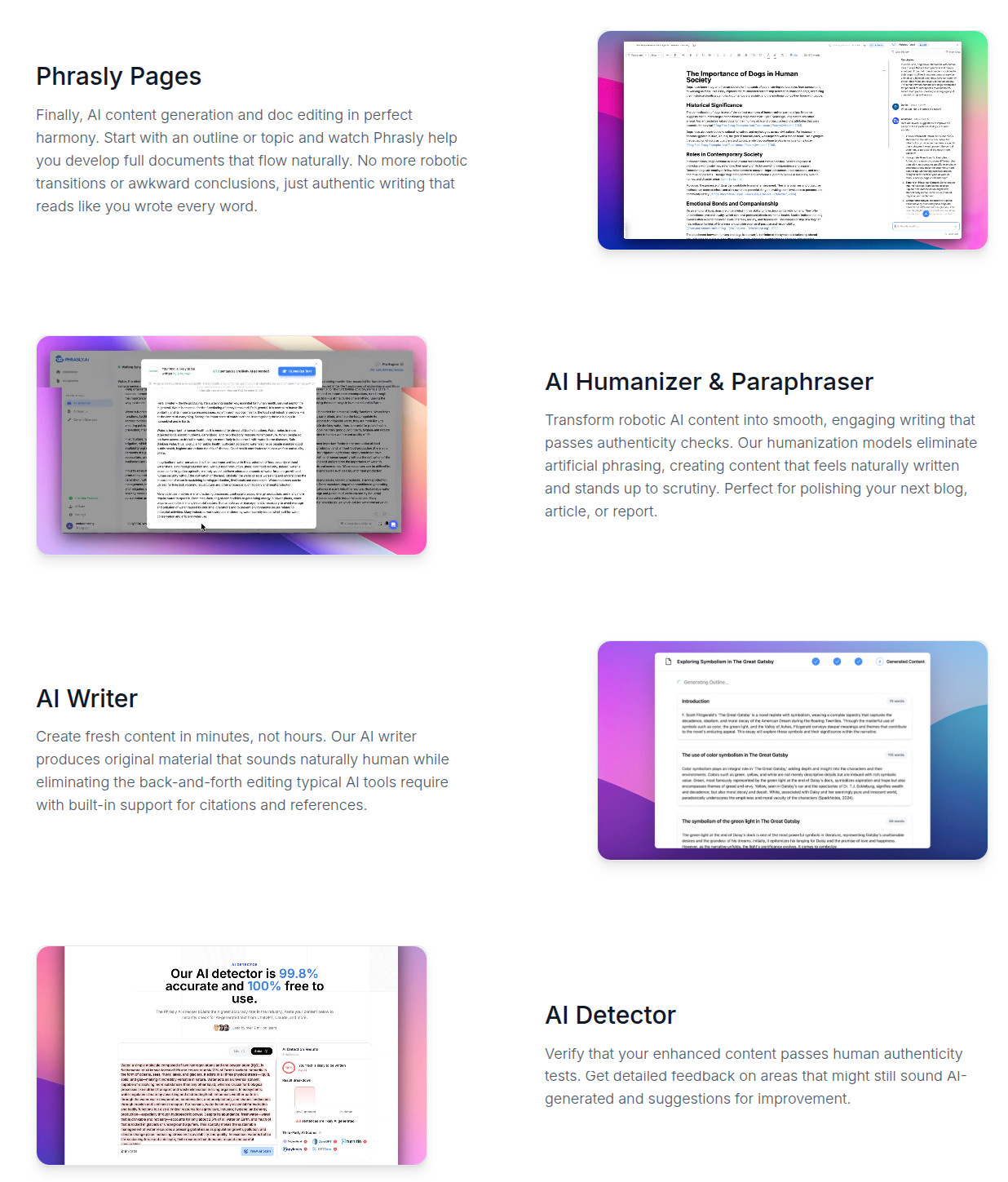
Basically, Phrasly’s whole deal is: take your AI generated text, rephrase it, paraphrase it, sprinkle some “human-like content” seasoning on top, and boom—it claims it’s plagiarism free and undetectable content.
It’s a paraphrasing tool at heart.
You just paste text in, hit generate, and it spits out “humanized text.”
They say it’s “plagiarism free,” but like… you still gotta double-check with an actual plagiarism checker because honestly, nothing’s perfect.
Features:
- AI detection removal (the juicy part)
- Paraphrasing + content generation
- Customization options (like tone, language, etc.)
- A free plan (limited to 550 words tho)
- Paid plans if you want bigger chunks
Pricing? Starts around $16.24/month or like $155.88/year (they push the “save money if you pay annually” thing).
Side note: That price feels… meh. Not super cheap, not crazy expensive. Somewhere in the middle.
How Phrasly AI Works (kinda nerdy but stick with me)
Okay, I’m not a machine learning engineer but here’s the gist.
Phrasly AI uses natural language processing (NLP) and some ML tricks to basically “study” how human written stuff looks. Then it takes your AI text and kinda squishes it through that filter.
Step 1: Analyze text.
Step 2: Paraphrase and swap patterns.
Step 3: Edit and clean.
It pulls from a big database of human written examples, so when you hit generate, it’s like “ah, humans don’t talk like that, lemme fix it.”
Does it always work? Lol, nah. Sometimes it comes out clunky. Sometimes it’s passable. It’s like running your essay through three friends—one fixes grammar, one adds slang, and one deletes half the commas.
Testing Phrasly AI
So I’ve seen people actually test Phrasly AI against different detectors: Originality AI, GPTZero, Turnitin, etc. And the results? Mixed.
Like, sometimes it totally bypasses AI detectors, other times it gets flagged instantly. It really depends on the detection tools you’re up against and the original AI generated content you’re feeding it.
If your starting text is super robotic, even Phrasly struggles. But if it’s already halfway decent, it polishes it into “human-like writing.”
Originality AI Overview
Switching gears. Now we’re talking about Originality AI—the actual cop in this story.
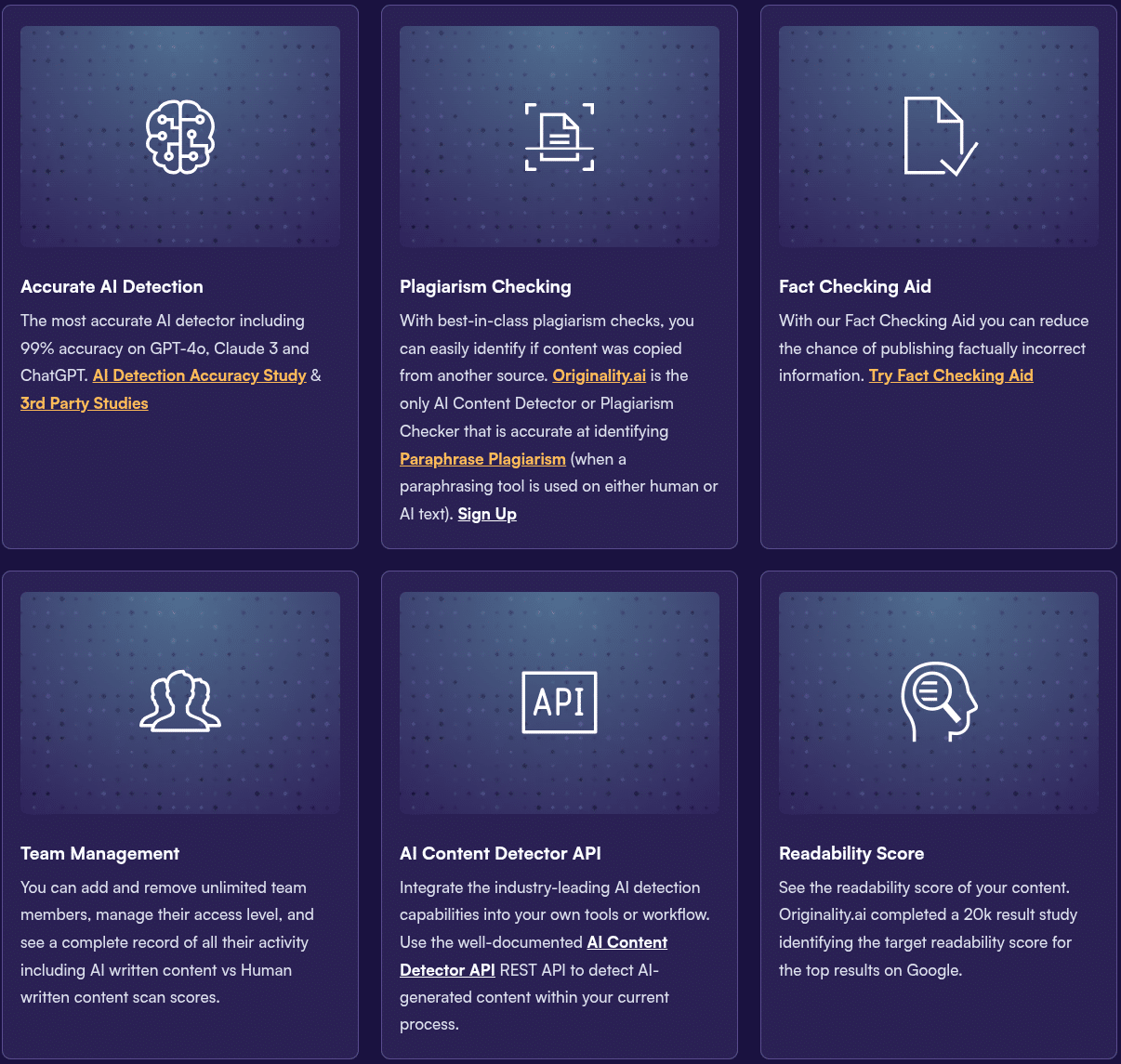
Originality is straight-up built for AI detection and plagiarism checking. They market it heavy to educators, publishers, and people who care about academic integrity.
What it does:
- Scans your text with pattern recognition.
- Checks for AI generated text markers.
- Can also do plagiarism scans.
- Shows you a percentage score: like “this is 82% likely AI.''
And honestly? Out of all the AI content detectors floating around, this one has a reputation for being one of the most accurate.
But, uh, accuracy is a tricky word. Sometimes Originality AI throws false positives, calling your actual human essay “AI written.” So yeah, stressful.
How Originality AI Works
Alright, so if you’re wondering what’s actually going on under the hood of Originality AI, let me try to break it down without sounding like a boring tech manual. Basically, it’s like… a giant sniffer dog for AI generated text.
It looks for little signals—like overly neat sentence structures, weirdly balanced vocab, even how predictable your word choices are. Because, you know, AI written content tends to fall into patterns.
Humans are messy. We repeat words, we forget commas, we sometimes write “idk” in the middle of an essay (oops). AI doesn’t usually do that unless you force it.
So Originality AI runs your text through a bunch of math-y pattern detectors (think NLP + probability models). Then it goes, “hmm, this feels 86% AI-ish.”
Not a perfect science, but it’s gotten a rep for being one of the sharper AI content detectors.
Side note: Sometimes it’s too sharp. Like, it’ll call out your actual human assignment as “AI generated,” which, honestly, sucks. Imagine writing your heart out at 3am and then a detector calls you a robot. Brutal.
Testing Originality AI
So yeah, I actually poked around with this (and also saw other people’s tests floating on Reddit and random blogs). Here’s what usually happens:
Throw in some clean ChatGPT output → boom, Originality flags it like 99% AI. No surprise.
Throw in some slightly edited stuff → maybe it drops to like 60–70% AI.
Throw in totally human writing → usually fine, but sometimes it still gives you like “20% AI.” Like bro… chill, I typed this myself.
The cool (or scary) part is that Originality AI doesn’t just do yes/no. It gives you those probability scores, which is useful but also… confusing. Like, what do you do with “42% AI”? Is that a fail? A pass? Who knows.
Oh, and it doubles as a plagiarism checker too, so teachers love it because they can kill two birds with one tool: check for copy-paste and for AI generated text.
Random thought: I wonder how many teachers are secretly running their own lesson plans through Originality and getting “AI written” pings back. Wouldn’t that be funny?
Originality AI vs Phrasly AI
So here’s the messy showdown.
One is offense, one is defense. One is sneakers, one is the cop with a flashlight.
They don’t really replace each other—they’re opposites. Which one you use depends on whether you’re trying to create content that looks “human written,” or you’re the person trying to identify AI generated content for academic integrity reasons.
Honestly, it’s kinda funny people compare them like apples-to-apples when they’re literally working against each other.
Alternatives to Phrasly AI
If you’re like, “eh, Phrasly feels sketchy,” there are a bunch of other tools floating around.
Each claims to make human like writing from AI generated text, but yeah—you gotta test them.
Academic Integrity and AI Written Content
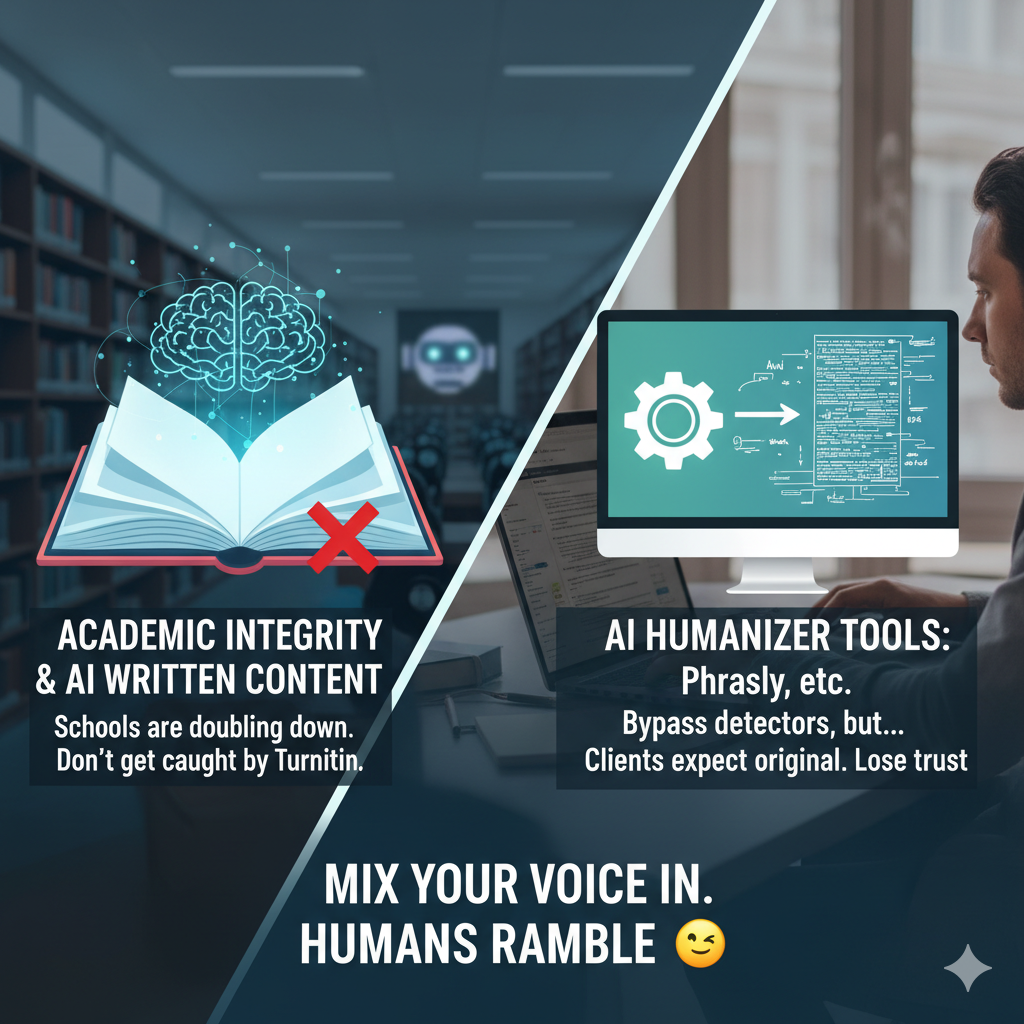
This part’s important. Look, I get why students are freaking out about AI detection. Assignments, deadlines, pressure. But schools are doubling down on maintaining academic integrity.
Using Phrasly or similar AI humanizer tools can get you through AI detectors like Turnitin—but if you get caught, it’s not a small thing.
And if you’re a blogger or freelancer? Clients will expect original content. If your stuff is flagged as AI, you lose trust.
So yeah, use tools, experiment, but also—write your own words sometimes. Mix your voice in. Detectors look for that “too clean” structure. Humans ramble (like I’m doing right now 😅).
Future of AI Detection vs AI Humanizers
This arms race isn’t slowing down. AI detection tools are getting sharper. AI writing tools are getting smoother. AI humanizers are patching over.
It’s literally tech vs tech.
Future looks like:
FAQs
Q: Does Phrasly AI make content 100% undetectable?
A: Lol no. It claims to, but it depends. Some detectors still catch it.
Q: Is Originality AI always accurate?
A: Not really. Sometimes it flags human stuff as AI. Accuracy rates vary.
Q: Is there a free plan for Phrasly AI?
A: Yup, but it’s capped at 550 words.
Q: Which is better—Originality AI or Phrasly AI?
A: Depends on what side you’re on. If you wanna bypass AI detection, go Phrasly. If you wanna identify AI written content, go Originality.
Q: Where can I learn more?
Final Verdict (kinda)
So yeah, Originality AI vs Phrasly AI isn’t really about “which is better.” It’s more like—do you wanna catch AI content, or do you wanna slip past detectors?
They’re playing opposite games. And neither is perfect. Both have flaws, both have wins.
If you’re a student, think about risk. If you’re a writer, think about quality. If you’re a professor, Originality is probably your tool. If you’re… trying to get sneaky, Phrasly might help.
But don’t rely 100% on any of them. Always double-check, mix in your own words, and keep an eye on this space—it’s moving crazy fast.
