

Can Google Detect Penalize AI Content? What You Need to Know
Let’s be real for a sec...
Every writer, marketer, and SEO nerd (yes, me included) has had that shower thought: “Can Google actually detect AI content? And will they nuke my rankings if I use it?”
If you’ve been losing sleep over it, don’t worry—you’re not alone. With the explosion of AI writing tools like ChatGPT, Jasper, Copy.ai, and now even Google’s own Search Generative Experience sneaking into results, the line between human generated content and AI written content is blurrier than my camera in Zoom meetings.
Here’s the spoiler though: Google doesn’t hate AI. What Google does hate is trash—aka low quality, spammy, keyword-stuffed, “I wrote this purely for search rankings” content.
Still, let’s break this down properly—because I know you’re not here for vibes. You’re here for answers.
Can Google Detect Penalize AI Content?
Short answer: yes, Google can detect it. But the longer, juicier answer? It’s complicated.
Google uses some heavy-duty machine learning systems like SpamBrain to spot manipulative content. And no, it’s not just looking for “AI fingerprints.” It’s evaluating patterns: repetitive sentence structures, awkward phrasing, auto-generated filler, and stuff that clearly screams “robot wrote this at 3AM without coffee.”
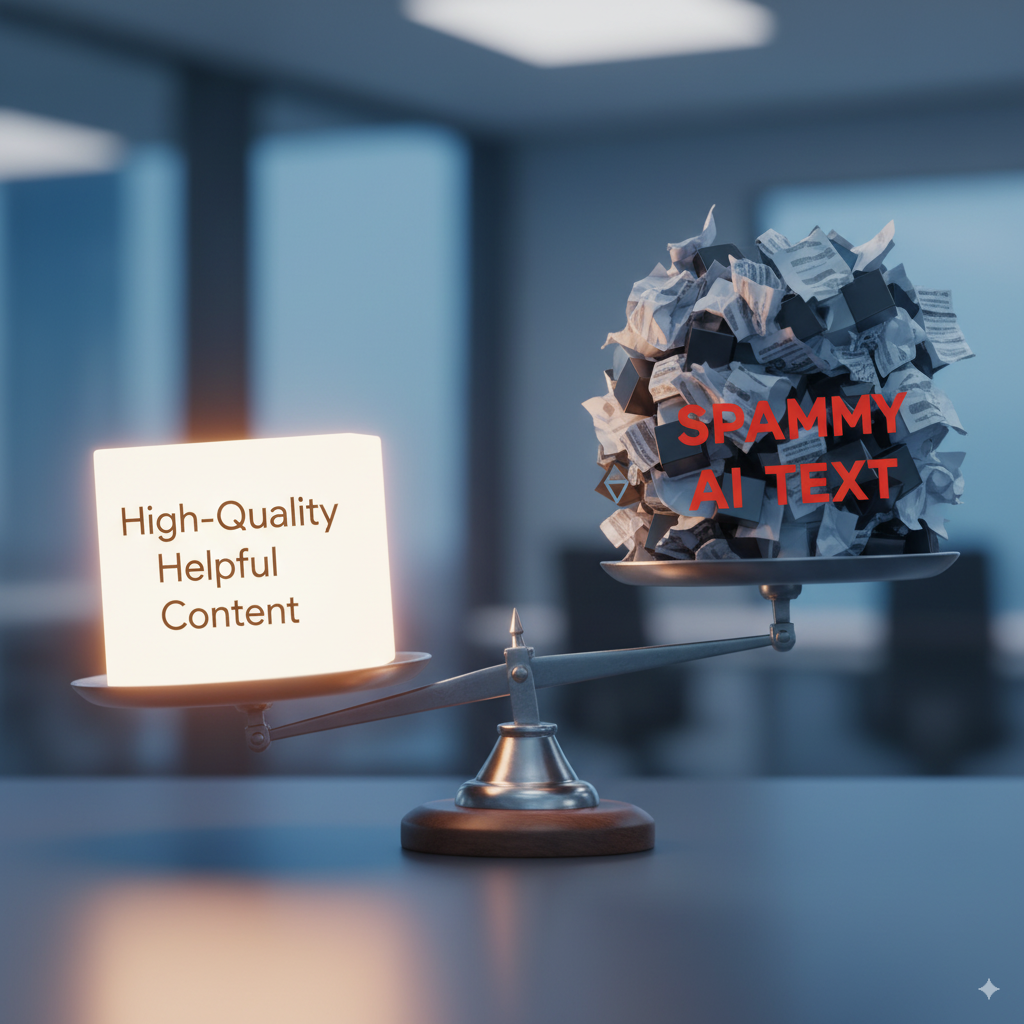
But here’s the kicker: Google has openly said they don’t automatically penalize AI generated text. They penalize low-quality content—whether it came from a human, AI, or your cat walking on a keyboard.
👉 Translation: if you’re publishing purely AI generated content with zero editing, zero originality, and stuffing in your target keyword like “can google detect penalize ai content” 37 times… yeah, you’re asking for a slap.
What is AI Generated Content (and why does it feel like cheating)?
AI generated content is basically anything created with the help of algorithms. Think:
Side note: Remember when people freaked out about Wikipedia “not being reliable” in school? Same energy. Now it’s AI.
The Big Myth: “Google Penalizes AI Content Just Because It’s AI”
Nope. Wrong. False. Toss that idea in the trash.
Google penalizes poor quality content, not AI content itself.
If you write a blog that solves a problem, provides real-world insights, and is structured clearly, it doesn’t matter if you wrote it with ChatGPT, a typewriter, or blood on a cave wall.
AI Written Content: Blessing or Curse?
Here’s the honest truth: I use AI every day. Why? Because sometimes I’m lazy. Sometimes I’m stuck. And sometimes I just want a machine to spit out “10 blog title ideas” so I can steal one and pretend I’m a genius.
But here’s where writers mess up:
And yes, E-E-A-T is still the gospel. You can read their guide here: Google E-E-A-T Explained.

AI Generation vs Human Written Content
Okay, let’s be blunt. AI is fast, humans are messy. And ironically, that’s what makes human content harder to replace.
Google’s systems are trained to spot “robot patterns.” But if you edit your AI drafts, inject some personal takes, and make it sound like you actually care—Google’s not gonna say “Oh wow, robot alert.”
Content Creation: Using AI Without Getting Burned
So, how do you use AI content without waving a big red flag at search engines?
- Start with AI for drafts → outlines, intros, or rough copy
- Add human input → your personal stories, data, and real experience
- Fix the tone → nobody talks like “Furthermore, in conclusion.” Cut that.
- Check quality standards → is it accurate, relevant, and useful?
Think of AI like a sous chef. It chops the onions, but you’re still the one cooking the meal.

AI Content Tools: The Good, The Bad, The Ugly
Here’s the fun part. Let’s name names.
Side note: If you’re paranoid, run your stuff through AI detectors. But remember—false positives happen. I once ran my handwritten draft through ZeroGPT and it screamed “99% AI.” Like bro, I wish.
Create Helpful Content: The Only Real SEO Strategy Left
If you skimmed this whole blog, take this one line: Google doesn’t care if you used AI. Google cares if you helped the user.
That’s it. That’s the tweet.
Helpful content = content that solves the problem your reader came for. Whether you typed it all or leveraged AI tools doesn’t matter.

Does AI Content Rank? (AI Content Rank Debate)
Yep, it does. Tons of AI-assisted blogs are ranking right now.
But here’s the catch: it’s not the AI-ness of the content that ranks—it’s the quality. If your content satisfies search intent, matches the topic, and provides value, it can rank. If not, Google buries it.
Content Quality > Everything
Repeat after me: content quality beats shortcuts.
Because yeah, Google can detect AI content. But more importantly, they can detect bad content—and that’s where penalties hit.
Side Note: Why “AI vs Human” is a Dumb Fight
Can we just stop pitting AI against human writers like it’s a boxing match? Writers are still needed. AI can’t replicate lived experience. It can’t tell you how it felt when your startup failed or why your SEO campaign bombed. That’s what Google rewards—unique perspective.
FAQs
Q1: Can Google detect AI content?
Yes. Google uses machine learning (like SpamBrain) to detect automatically generated content patterns. But detection doesn’t always equal penalization.
Q2: Will Google penalize AI content?
Not if it’s good. Google penalizes poor quality content, whether it’s AI written content or human.
Q3: How do I make AI generated content safe for SEO?
Edit it. Add personal expertise. Check for accuracy. Use it as a tool, not a replacement.
Q4: Is AI content against Google’s guidelines?
No. Google clarified here that appropriate use of AI is fine—as long as the primary purpose is creating helpful content, not manipulating search engines.
Q5: Can AI content rank on Google?
Yes. High quality, edited AI-assisted content ranks. Low quality, spammy content doesn’t.
Q6: Which AI tools are best for content creation?
ChatGPT, Jasper, Copy.ai, etc. But honestly? The best tool is whichever one you’ll actually use—and then edit.
Final Thoughts (aka my ranty conclusion)
So… can Google detect penalize AI content? Yup. But will they? Only if it sucks.
The real danger isn’t “Google hates AI.” It’s that lazy writers think AI = shortcut. Google’s smarter than that. Their algorithms are built to prioritize helpful, human-centric content.
Use AI. Leverage it. Heck, rely on it for the boring parts. But don’t skip the human touch. Add your messy opinions, your real-world examples, your actual personality. That’s the difference between ranking #1 and disappearing into the abyss of page 7.
