

Originality AI vs Turnitin — Why This Battle Even Matters
Let’s be real: AI writing isn’t just “the future” anymore — it’s here, lurking in every assignment, every blog post, every suspiciously perfect discussion board reply. Educators and content pros aren’t just looking for a plagiarism checker anymore — they want something that can sniff out AI-generated content faster than a teacher can say, “Wait a minute…”
That’s where these two come in:
The thing is… they’re very different beasts.
Originality AI
Originality AI is an advanced plagiarism detection and AI-content detection tool designed for publishers, SEO professionals, and content marketers. It not only checks for copied text but also identifies AI-generated writing, making it highly useful in today’s AI-driven content landscape.
Key Features and User Experience/UI with Originality AI
- AI Content Detection – Accurately detects if a piece of text is written by AI tools like ChatGPT or other LLMs.
- Plagiarism Checker – Scans content against billions of web pages and documents.
- Readability Scoring – Provides Flesch reading ease scores to assess content clarity.
- Team Management – Allows multiple team members to run checks under one account.
- API Access – Offers API integration for seamless content verification in workflows.
- Batch Scanning – Supports scanning multiple documents at once to save time.
- Detailed Reporting – Generates comprehensive plagiarism and AI detection reports.
- Pay-as-you-go Pricing – Flexible payment model based on usage credits.
Pros
- Detects both plagiarism and AI-written text.
- High accuracy in AI-content identification.
- User-friendly interface for bulk content scanning.
- Affordable pay-per-use pricing.
- Ideal for SEO agencies, publishers, and marketers.
Cons
- Limited educational institution adoption compared to Turnitin.
- No offline checking option.
- Requires internet connection for scans.
Turnitin
Turnitin is a widely recognized plagiarism detection platform primarily used in educational institutions. It helps educators and students maintain academic integrity by checking submissions against extensive databases of scholarly works, publications, and the internet.
Key Features and User Experience/UI with Turnitin
- Extensive Database – Access to billions of academic papers, journals, and online content.
- Similarity Reports – Provides a detailed breakdown of matching text and sources.
- Grammar and Feedback Tools – Offers language improvement suggestions.
- Classroom Integration – Works seamlessly with platforms like Canvas, Moodle, and Blackboard.
- Peer Review Tools – Allows students to review each other’s work for learning purposes.
- Multiple File Formats – Supports PDF, DOC, and various other file types.
- Assignment Management – Lets educators create and manage assignments.
- Data Security – Stores submissions securely for future plagiarism checks.
Pros
- Trusted by schools and universities worldwide.
- Extensive and reputable content database.
- Offers integrated grading and feedback tools.
- Helps maintain academic integrity.
- Strong institutional support and integration.
Cons
- Cannot detect AI-generated text as effectively as specialized tools.
- Primarily focused on academic use, less flexible for businesses.
- Subscription-based pricing can be costly for individuals.
AI Tools: Same Goal, Different DNA
Both tools are AI detectors, but their roots matter.
Side note: I’ve seen more and more faculty use Originality AI as a second opinion because sometimes Turnitin flags way too much. That “false positives” problem? Yeah… we’ll get to that.
AI Generated — What They Can and Can’t Sniff Out
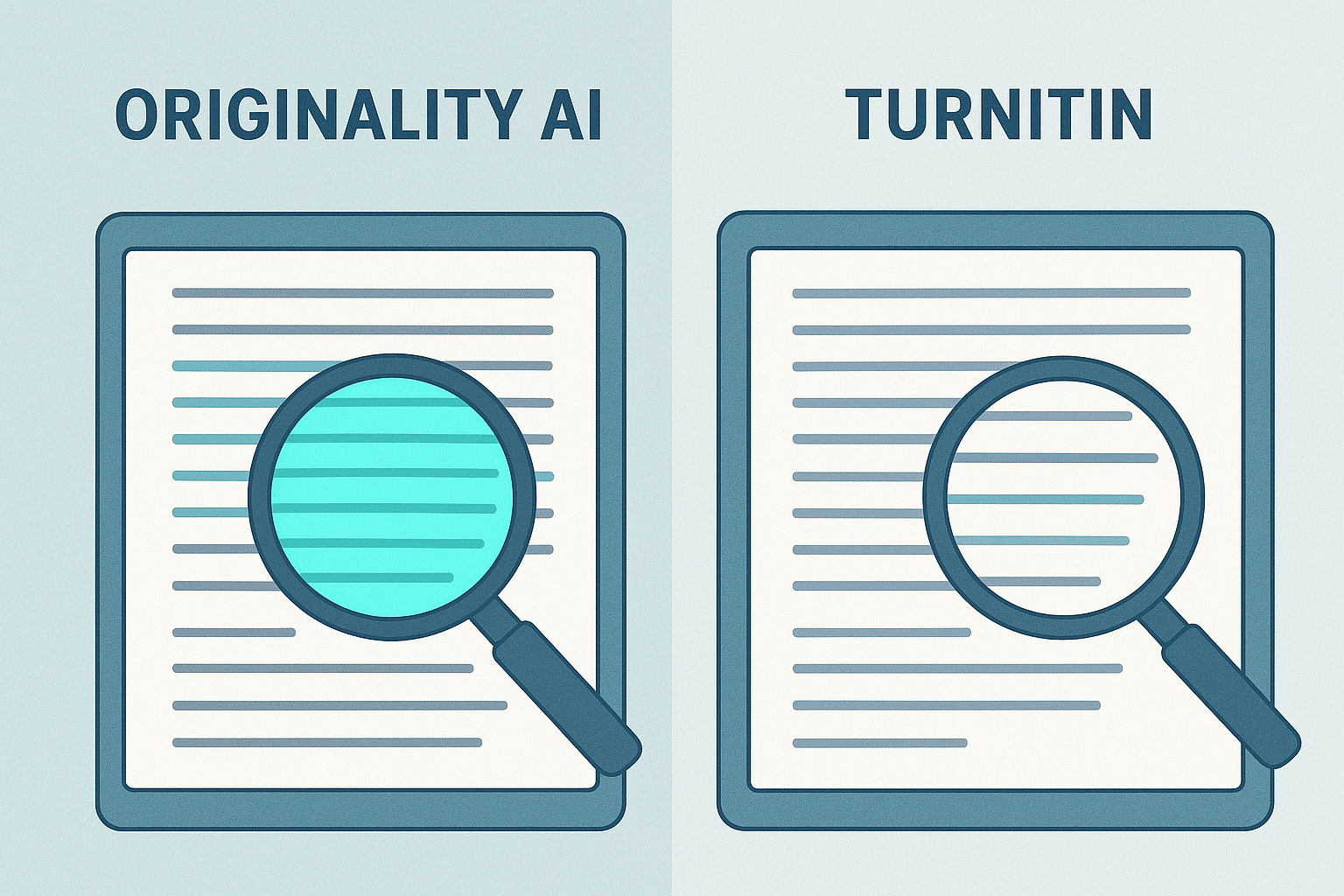
Here’s where you see their personalities:
A fun test? Feed them a ChatGPT answer that’s been lightly edited. Originality AI will probably still nail it. Turnitin? Might let it pass.
AI Writing: The Subtlety Problem
AI doesn’t always “sound” AI anymore. Gone are the days when you could spot it with too many “in conclusion” phrases. Tools need to catch patterns, not just words.
Side note: This is why human judgment still matters. An AI tool is not your get-out-of-marking-free card.
AI Detector — Who’s More Accurate?
Everyone wants to know “which one is better?” but here’s the truth:
If your nightmare is students crying “but I wrote it myself!” then Originality AI might feel safer — but if you’re deep in academic paperwork land, Turnitin’s report style is… built for the bureaucracy.
AI Paraphrasing — Can They Catch It?
AI paraphrasing is the sneaky cousin of outright AI writing. Think: ChatGPT output run through QuillBot or another paraphrase bot.
From my own tests:
AI Content Detection — Beyond Essays
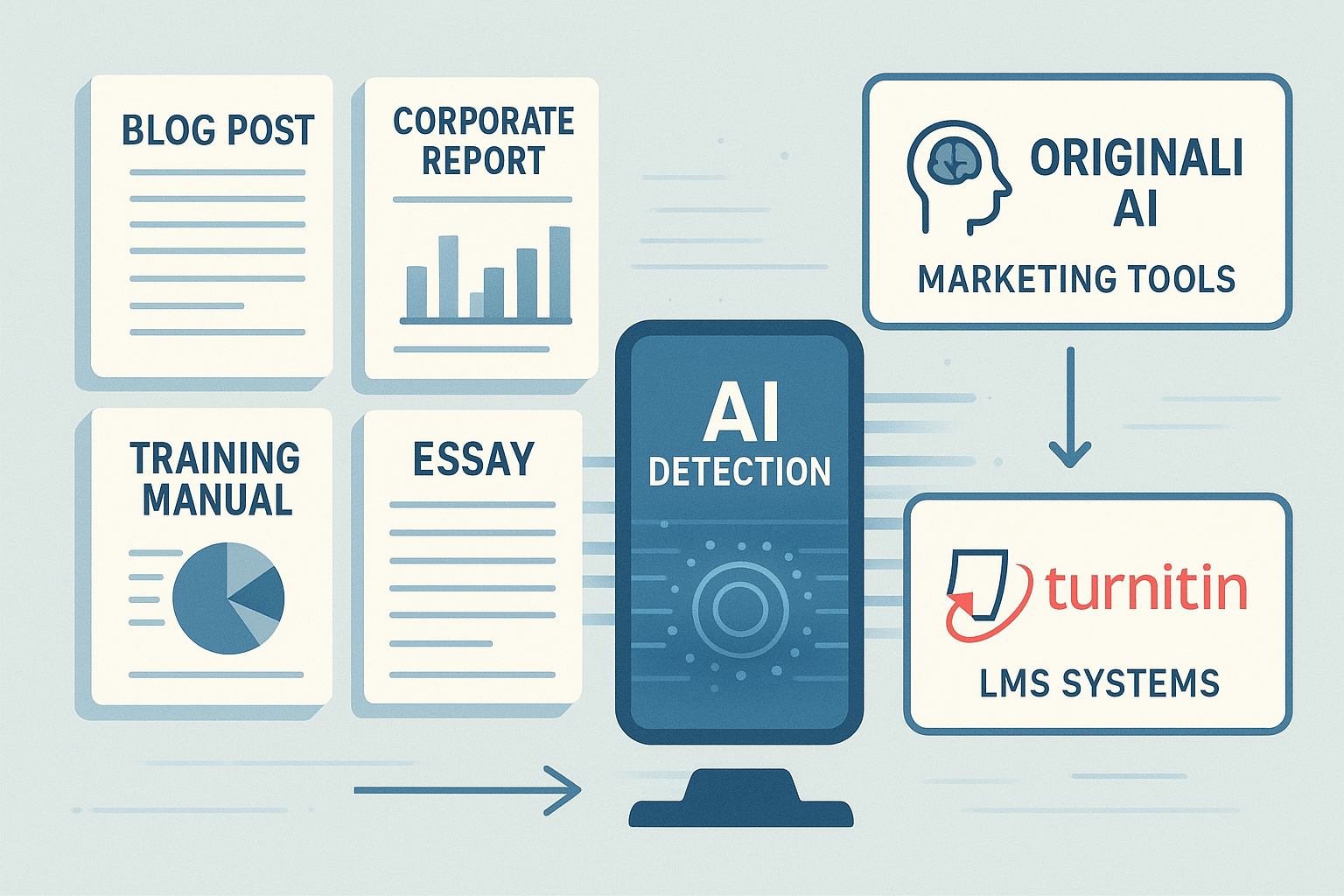
Remember, AI content detection isn’t just about term papers. It’s blog posts, reports, corporate training docs, everything.
That’s why marketers like Originality AI — it fits right into content workflows. It’s API-friendly, integrates with CMS tools, and even works for SEO audits.
Turnitin… is still mostly stuck in the education bubble.
Academic Integrity — More Than Just Catching Cheaters
Here’s the philosophical bit. AI detection is not about catching people — it’s about keeping the value of real thinking.
Originality AI and Turnitin both push this narrative, but they go about it differently:
And yeah — both can be wrong sometimes. That’s why you need a mix of human review and machine detection.
Content Detection — The Bread and Butter
Both tools excel at content detection, but in different arenas:
If you’re grading essays? Turnitin is king.
If you’re screening web articles or press releases? Originality AI wins.
Evaluation Criteria for AI Detectors
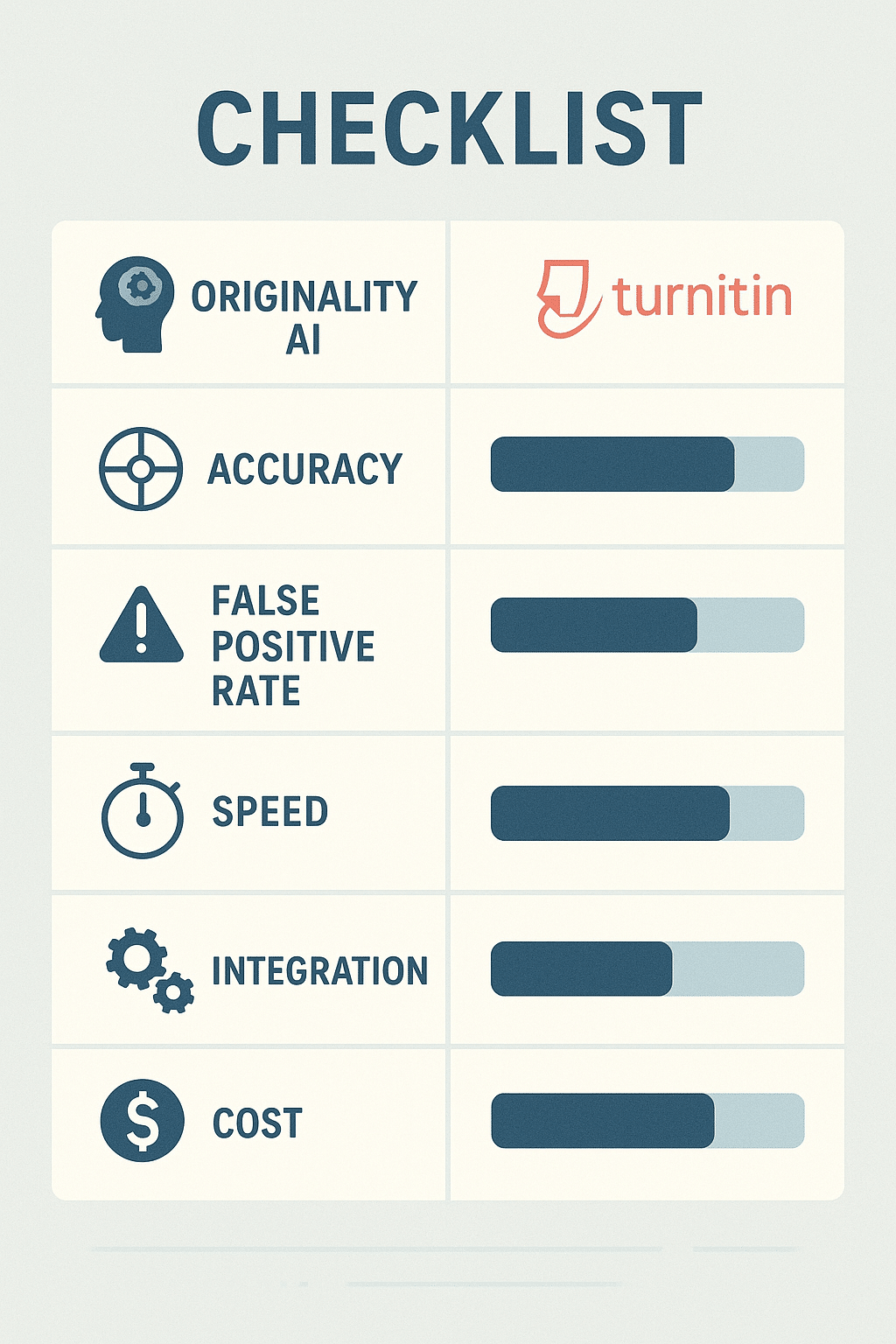
When evaluating AI detectors, key criteria include accuracy, false positives, and false negatives. A high accuracy rate is essential for reliable AI detection, while minimizing false positives and negatives.
The evaluation of AI detectors should also consider their ability to detect AI-generated content and plagiarism. AI detectors should be able to identify AI-written text, including AI-generated content and AI-paraphrased text.
The best AI detector should balance accuracy with a low false positive rate, ensuring reliable results.
When choosing an AI detection tool, I look at:
Content Detection and Analysis
- Content detection and analysis are critical components of AI detectors, enabling the identification of plagiarism and AI-generated content.
- AI detectors, such as Originality AI, use advanced algorithms to analyze text and detect potential instances of academic dishonesty.
- The analysis of content helps educators identify AI-generated content, including AI-written text and AI-paraphrased text.
- Content detection and analysis support the maintenance of academic integrity in educational institutions.
- By analyzing content, educators can encourage students to submit authentic, human-written work.
Originality AI vs Turnitin : Head-to-Head Comparison
Feature | Originality AI | Turnitin |
|---|---|---|
Core Focus | AI-generated content detection & plagiarism for web publishers & educators | Plagiarism detection, grading workflow, and academic integrity |
AI Writing Detection | Very high accuracy, strong at spotting paraphrased AI text | Good accuracy, but more prone to false positives |
Plagiarism Detection | Web-scale detection, less deep academic databases | Deep academic repository and submission archive |
False Positives | Relatively low | Higher—requires careful human review |
Interface & UX | Clean, modern, marketer-friendly UI | School-focused, LMS-driven dashboard |
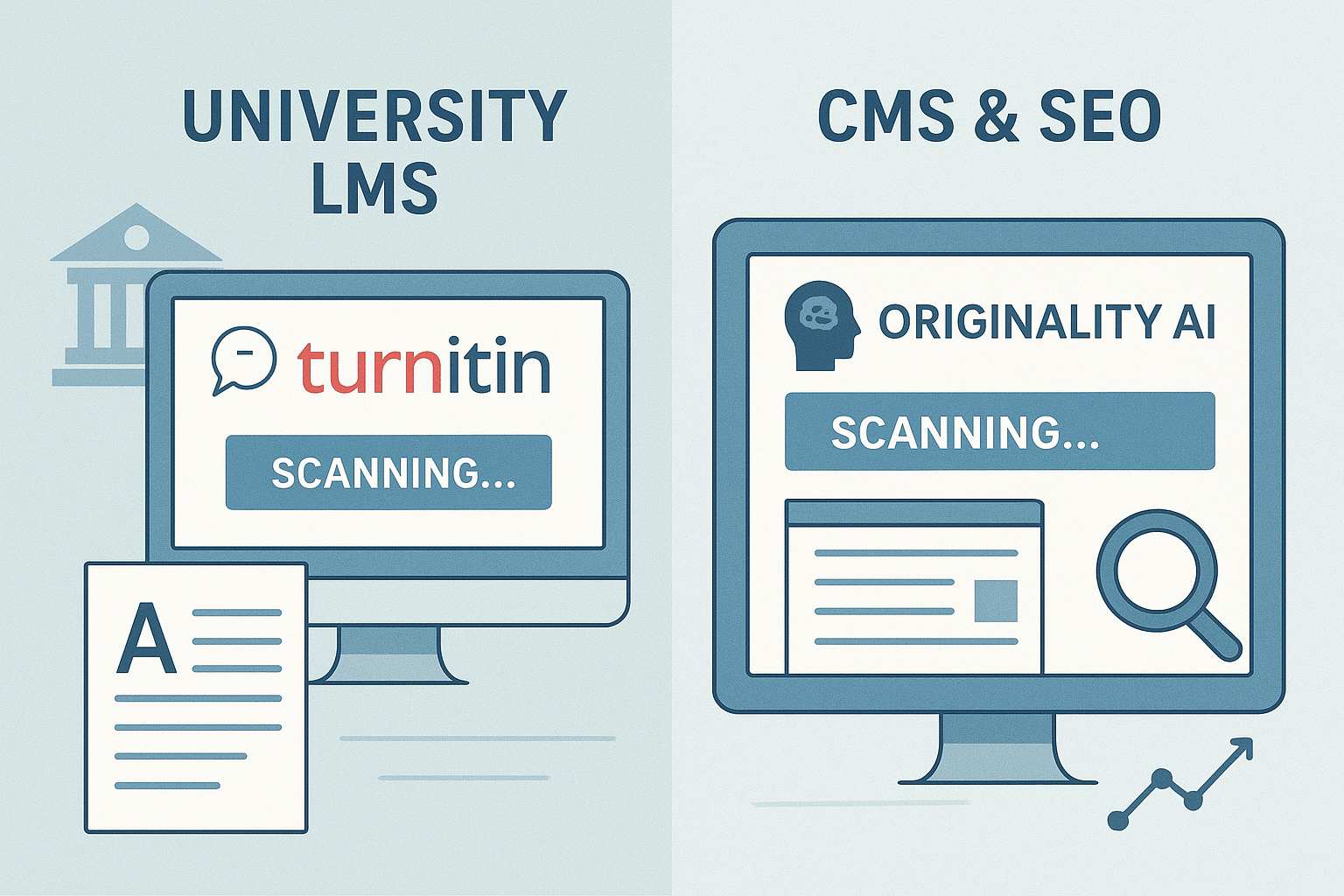
Integration | CMS-friendly, APIs for content teams | Deep LMS integration (Canvas, Moodle, Blackboard) |
Ideal for | Content creators, educators, web publishers | Educational institutions, schools, universities |
Pricing Model | Affordable, usage-based plans | Subscription via institutional contracts |
Language Support | Primarily English; expanding | Extensive, covers multiple languages and dialects |
Analysis Speed | Fast and lightweight | Slower, but detailed for academic staffing |
App & API | Available | Integrated into LMS systems |
Use Scenario Highlight | Detect AI content in blogs, articles, essays | Flag plagiarism in student essays submitted in LMS |
- If your worry is “That blog post feels too polished,” Originality AI’s model shines.
- If you need to check 10 years of student submissions, Turnitin’s repository is unmatched.
- Best move? Use both for extra peace of mind.
User Experience and Interface
- A user-friendly interface is essential for AI detectors, enabling educators to easily navigate and use the tool.
- Originality AI offers a simple and intuitive interface, making it easy to upload documents and view results.
- Turnitin’s interface is also user-friendly, with a focus on educational institutions and academic integrity.
- The interface of AI detectors should be designed to support the needs of educators and students.
- A well-designed interface can improve the overall user experience and encourage the use of AI detectors.
Integration with Learning Management Systems
- Integration with learning management systems (LMS) is critical for AI detectors, enabling seamless use and accessibility.
- Turnitin integrates with popular LMS platforms, including Canvas and Blackboard.
- Originality AI also offers integration with LMS platforms, supporting the needs of educators and students.
- The integration of AI detectors with LMS platforms supports the maintenance of academic integrity in educational institutions.
- By integrating AI detectors with LMS platforms, educators can easily access and use the tools.
Language Support and Accessibility
- Language support and accessibility are essential for AI detectors, enabling use by educators and students worldwide.
- Turnitin supports multiple languages, including English, Spanish, and French.
- Originality AI also offers language support, with a focus on English and other popular languages.
- The language support and accessibility of AI detectors should be designed to meet the needs of diverse users.
- By supporting multiple languages, AI detectors can be used by educators and students globally.
Best Practices for Using AI Detectors
- Best practices for using AI detectors include regularly updating software and training educators on their use.
- AI detectors should be used in conjunction with human judgment to ensure accurate results.
- The integration of AI detectors in educational settings should be designed to support the needs of educators and students.
- Best practices for using AI detectors can help maintain academic integrity and promote original writing.
- By following best practices, educators can effectively use AI detectors to support student learning.
Limitations and Challenges of AI Detectors
- AI detectors have limitations and challenges, including the potential for false positives and false negatives.
- The accuracy of AI detectors can be affected by the quality of the training data and the complexity of the text.
- AI detectors should be used in conjunction with human judgment to ensure accurate results.
- The limitations and challenges of AI detectors should be considered when evaluating their effectiveness.
- By understanding the limitations and challenges of AI detectors, educators can use them effectively to support student learning.
Conclusion and Recommendation
In conclusion, AI detectors, such as Originality AI and Turnitin, are essential tools for maintaining academic integrity. These tools utilize artificial intelligence to detect plagiarism and AI-generated content, promoting original writing.
The integration of AI detectors in educational settings supports the development of authentic student writing. Based on the evaluation of AI detectors, it is recommended that educators use these tools to support student learning.
By using AI detectors, educators can encourage students to submit authentic, human-written work and maintain academic integrity.
Future of AI in Education
- The future of AI in education is promising, with AI detectors playing a critical role in maintaining academic integrity.
- AI detectors will continue to evolve, with advancements in artificial intelligence and machine learning.
- The integration of AI detectors in educational settings will support the development of authentic student writing.
- The future of AI in education will be shaped by the effective use of AI detectors and other AI-powered tools.
- By embracing AI detectors and other AI-powered tools, educators can support student learning and maintain academic integrity.
