

Tap Business Card: Modern Networking at Your Fingertips
Why I ditched paper (and you probably should too)
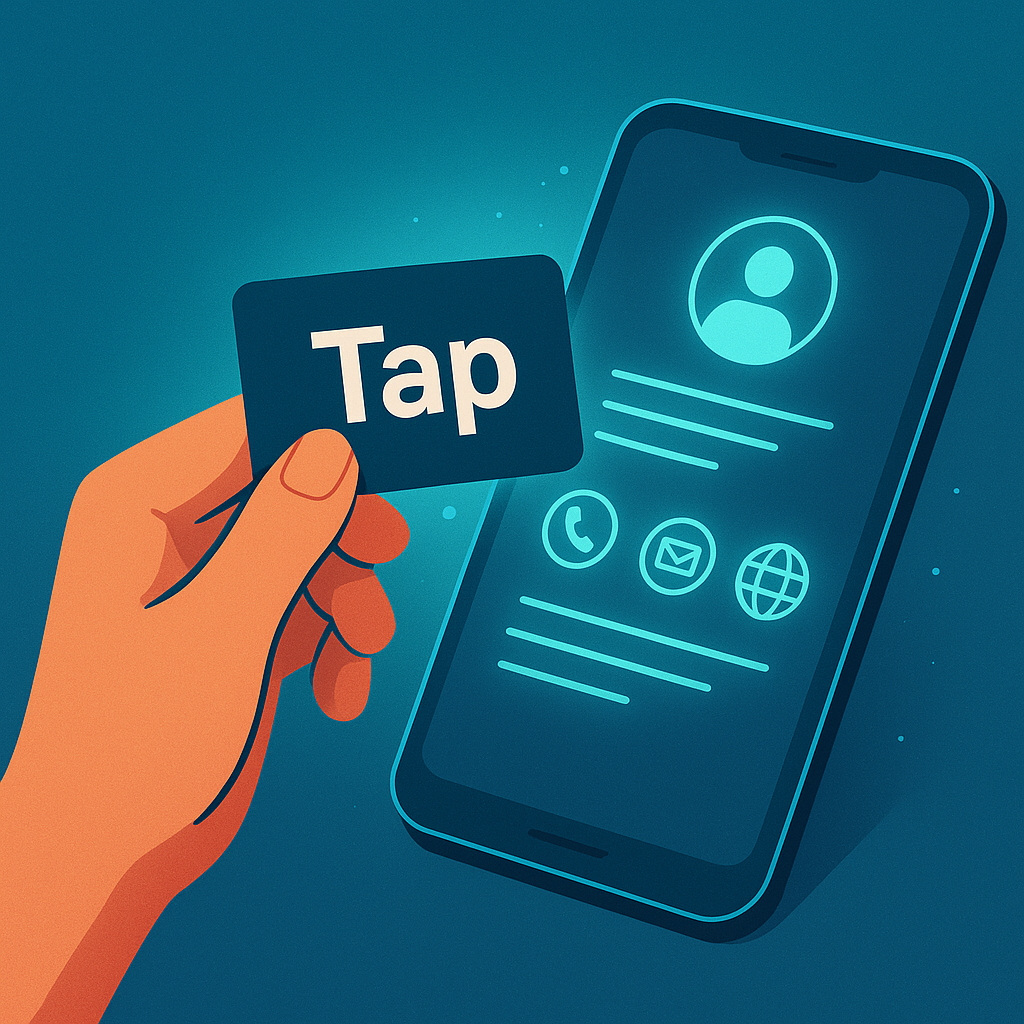
Look, traditional paper business cards are dead. I mean, not completely—sure, you can still hand them out, and some people even like the “feel” of them. But in a world where we’re already glued to smartphones, why would I want to hand you a tiny piece of cardboard you’ll lose in your bag or—let’s be honest—throw away at the end of the night?
Here’s the deal: networking should be smooth. It should feel like magic. Like just a tap and boom—we’re connected. That’s what a tap business card does with this innovative technology . It’s basically like a digital business card on steroids.
And yeah, I know, I sound like I’m selling snake oil, but hear me out.
What even is a tap business card?
So “tap business card” is just the cool name for an NFC business card using nfc technology . NFC = Near Field Communication. Same tech that lets you tap your phone to pay at checkout. Instead of money, though, it shares your contact info, social media, portfolio links—basically your whole digital profile—with just a tap.
➡️ Example: You’re at a conference. Someone asks what you do. Instead of digging through your bag for a bent business card, you literally tap your card to their phone, and your profile opens instantly (share a contact card on iPhone). Done. No paper wasted. No “I’ll text you later.”
Side note: some of these cards also work with QR codes for the iPhone crowd who haven’t figured out NFC yet (or if someone’s rocking a dinosaur Android that doesn’t scan properly).
Digital business cards = eco-friendly flex
I won’t bore you with stats, but did you know something like 90% of paper business cards get thrown away within a week, leading to lost opportunities for customers.
Now, imagine spending hundreds printing cards just to see them trashed. Not only is that money literally in the garbage, but—hello—trees. If you’re running a modern brand, being eco-friendly isn’t just “nice,” it’s basically PR, and a sustainable solution like a tap card is a part of that . A tap card? It’s reusable forever. One card. No waste. People notice that.
(Side rant: I once spent $150 on a “premium matte black” paper card order. They looked slick. Guess how many actually landed me a meeting? Two. TWO. I could’ve just Venmo’d myself for the pain.)
Features that actually matter
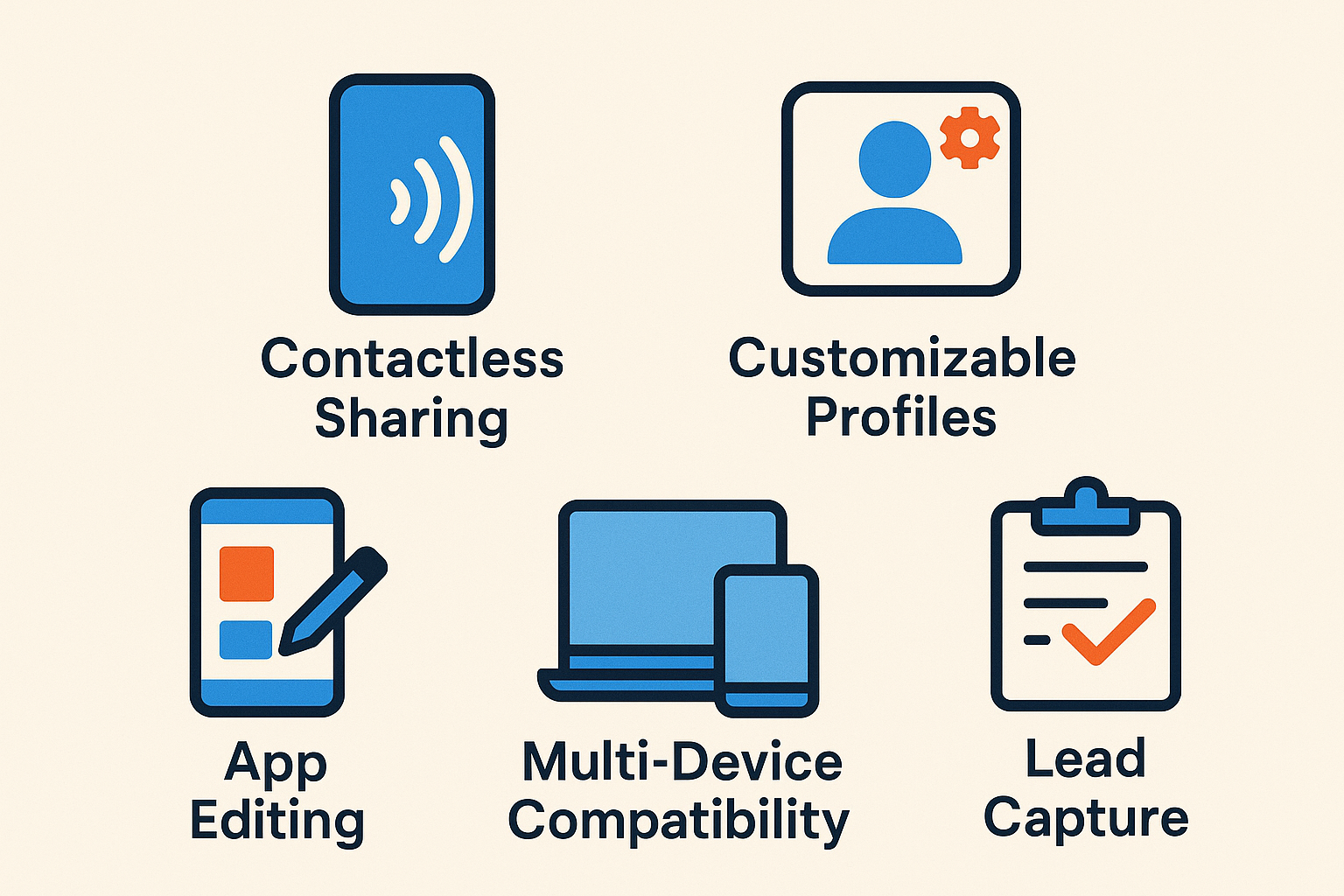
Alright, let’s nerd out for a second. What makes a tap business card worth it?
Side note: If you’re like me and can’t stop tweaking your “About” blurb at 3 a.m., the real win is being able to customize and edit your digital profile without reprinting anything.
Tap vs. paper: the awkward showdown
Let me paint a picture.
You: hands over a tap card
Them: “Wait, what’s this?”
You: “Just tap it with your phone.”
Them: does it, and your LinkedIn pops open instantly
Them: “Whoa. That’s cool.”
Compare that to…
You: hands over a paper card
Them: “Cool, thanks.” pockets it, forgets about it, finds it weeks later under gum wrappers
Guess which one makes you memorable?
Who actually needs one? (Hint: probably you)

Honestly, even if you’re a job seeker, having a tap card makes you look sharp. Like, “I understand digital.” And yes, recruiters will notice.
The NFC magic (without tech-babble)
Okay, quick nerd breakdown (but promise it’s digestible):
NFC = short-range wireless tech. Your phone already uses it when you do Apple Pay or Google Pay. Your tap business card has a tiny NFC chip. When someone taps it, their phone reads it, and boom—your digital card opens in their browser. No app required.
If NFC freaks you out, most cards also give you a QR code backup. Just in case you’re at an event where someone’s rocking an iPhone XR that refuses to behave.
How to make one that doesn’t suck
I’ll be real: not all tap business cards are created equal, especially when it comes to storing contact details . Some look cheap, some break after two months, some have clunky apps. Here’s what to look for:
- Custom branding – Your logo, your colors. Don’t settle for generic.
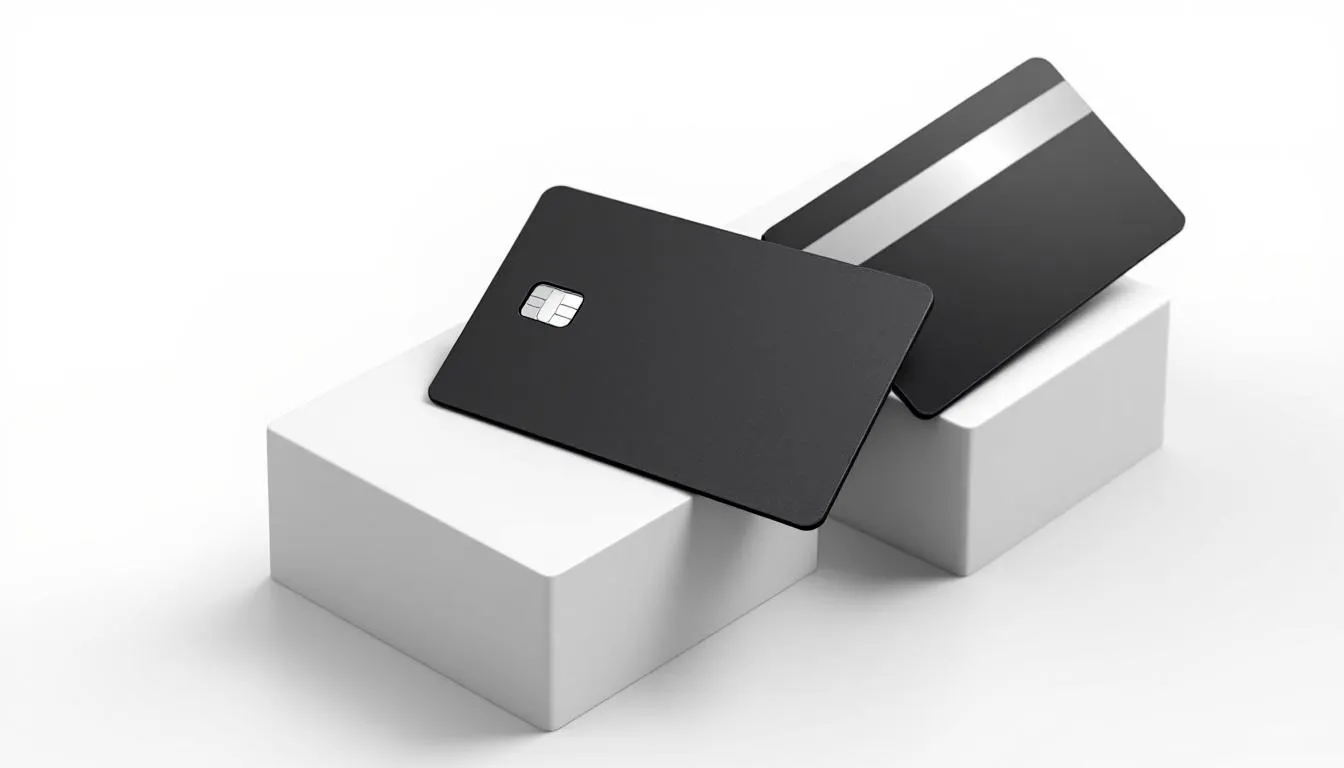
- Slick design – Matte black, metal, wood—get something that feels premium.
- Good app support – If updating info is a nightmare, skip it.
- Data privacy – Make sure the company isn’t selling your info. (Yes, some do. Gross.)
- Price vs. value – Some are one-time purchase ($20–$50). Others are subscription-based with advanced features. Pick what fits your game.
I’ve personally tried Popl and Tappy—both are solid. I like Popl’s app better; Tappy has cooler card designs.
But wait—what about managing leads?
Here’s the underrated part: tap products like these cards aren’t just about sharing your info. Some platforms let you collect the other person’s info right there. Like a digital handshake.
Imagine leaving a networking event with 50 qualified contacts neatly stored in your dashboard instead of 50 paper cards you’ll never organize.
Side note: If you’re into CRMs, some tap cards integrate with HubSpot, Salesforce, or even Zapier, improving your networking game . That’s next-level.
Is it actually worth the hype?
Here’s my take: Yes, and you can forget printing hundreds of traditional cards by switching to digital business cards. Especially if networking is a big part of your business.
You’ll:
But… if you’re old-school and love the ritual of handing someone a physical card? Keep a small stack in your bag. Just don’t expect them to do as much heavy lifting.

Some quick “gotchas” nobody tells you
Resources & tools
- Popl – probably the most popular.
- Tappy – great design options.
- Mobilo – focus on team/enterprise features.
- Linq – strong integrations.
Also, a good breakdown here: Best NFC Business Cards 2025.
Wrapping it up
Paper business cards had their run. They were fine in the 90s. But now? Tap business cards are the future of networking. They’re slick, eco-friendly, editable, and—most importantly—they make you memorable.
Next time you’re at an event, don’t be the person fumbling for paper. Be the person who says “just tap it.”
Trust me, people remember that.
