

But which one suits your needs better — Popl or Flowcode? This comprehensive popl vs flowcode comparison will help you decide based on pricing, features, customization, integrations, security, user experience, and scalability.
What Are Digital Business Cards?
A digital business card is a contactless, dynamic version of the traditional paper card that allows you to share your contact details, social media profiles, QR codes, Apple Wallet passes, and more — instantly.
These smart cards often include:
Custom branding
CRM integration
Lead capture forms
Analytics dashboards
Support for Apple Wallet or Google Wallet
Digital cards are not just green and convenient — they’re smart, adaptive, and data-driven, ensuring high levels of security .
Popl Overview: A Powerhouse for Customization and CRM Integration

Popl is one of the most comprehensive platforms on the market for creating digital business cards and smart contact solutions. It’s widely used by sales professionals, entrepreneurs, and even enterprises like Keller Williams and Microsoft to connect with their clients .
Key Features of Popl
Custom templates and branding options
Advanced lead capture via QR or tap
CRM integrations (Salesforce, HubSpot, Zoho, etc.)
Real-time analytics on card views and conversions
Apple Wallet and Android device support
Multi-card management for teams
API and SSO options for enterprise use
Virtual backgrounds for video calls
Popl’s solution integrates with tools like Google Analytics, Zapier, Slack, and Outlook, making it ideal for complex workflows.
📌 Pricing: Starts at $7.99/month with enterprise-level team options.
Flowcode Overview: Seamless QR & Wallet Integration
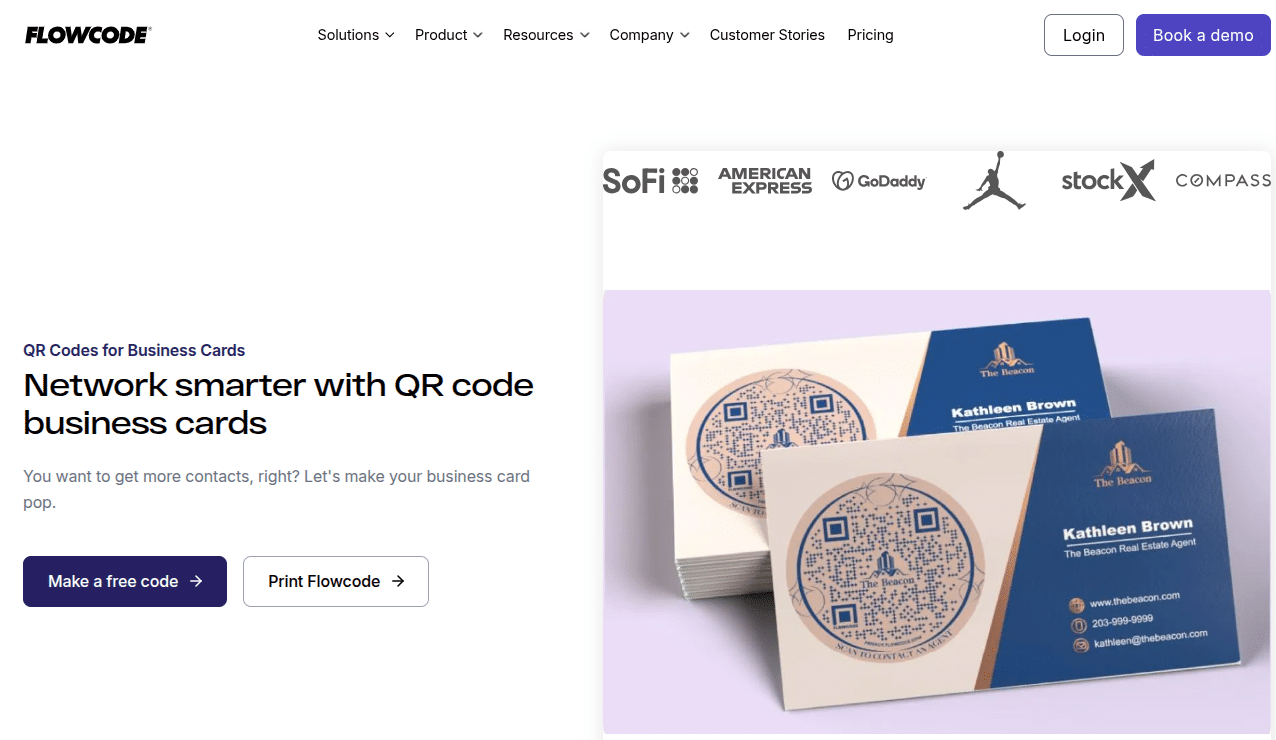
Flowcode specializes in dynamic QR codes and smart experiences that help you create digital business cards . While it does offer digital business card functionality, it’s best known for its elegant QR ecosystem, which includes event tracking, mobile optimization, and analytics.
Key Features of Flowcode
Dynamic QR codes with automatic updates
Seamless Apple Wallet/Google Wallet integration
No app download needed for sharing
Built-in email capture and redirection options
Analytics: scan tracking, location insights, device breakdown
CRM-friendly export formats
Flowcode’s emphasis is on frictionless mobile experiences and analytics-driven engagement, with QR codes that can be embedded into signage, business cards, marketing materials, or digital wallets, enhancing your networking efforts .
📌 Pricing: Free version available. Pro plans start at $25/month, with custom enterprise solutions available upon request.
Popl vs Flowcode: Key Feature Comparison
Feature | Popl | Flowcode |
|---|---|---|
Customization | High: Templates, colors, logos | Moderate: QR branding, mobile pages |
Lead Capture | ✅ Advanced capture forms | ✅ Basic email/phone forms |
CRM Integrations | ✅ Salesforce, HubSpot, Zoho, Zapier | ✅ CSV export, no direct CRM sync |
Apple/Google Wallet Support | ✅ Yes (Apple + Android) | ✅ Optimized for native wallet usage |
Analytics | ✅ Full dashboard with UTM links | ✅ Scan count, time, and geo-based data |
API/SSO | ✅ Available for enterprise | ❌ Limited (no open API for cards) |
Physical NFC Cards | ✅ Yes, branded Popl cards | ✅ Yes, but limited styles |
Dynamic QR codes | ✅ Fully editable and trackable | ✅ Flowcode signature feature |
Video & Virtual Backgrounds | ✅ Yes, supports virtual Zoom backgrounds | ❌ Not currently offered |
Pricing Flexibility | ✅ Freemium + Pro + Team tiers | ✅ Free + Pro + Custom Enterprise |
Customization & Brand Identity
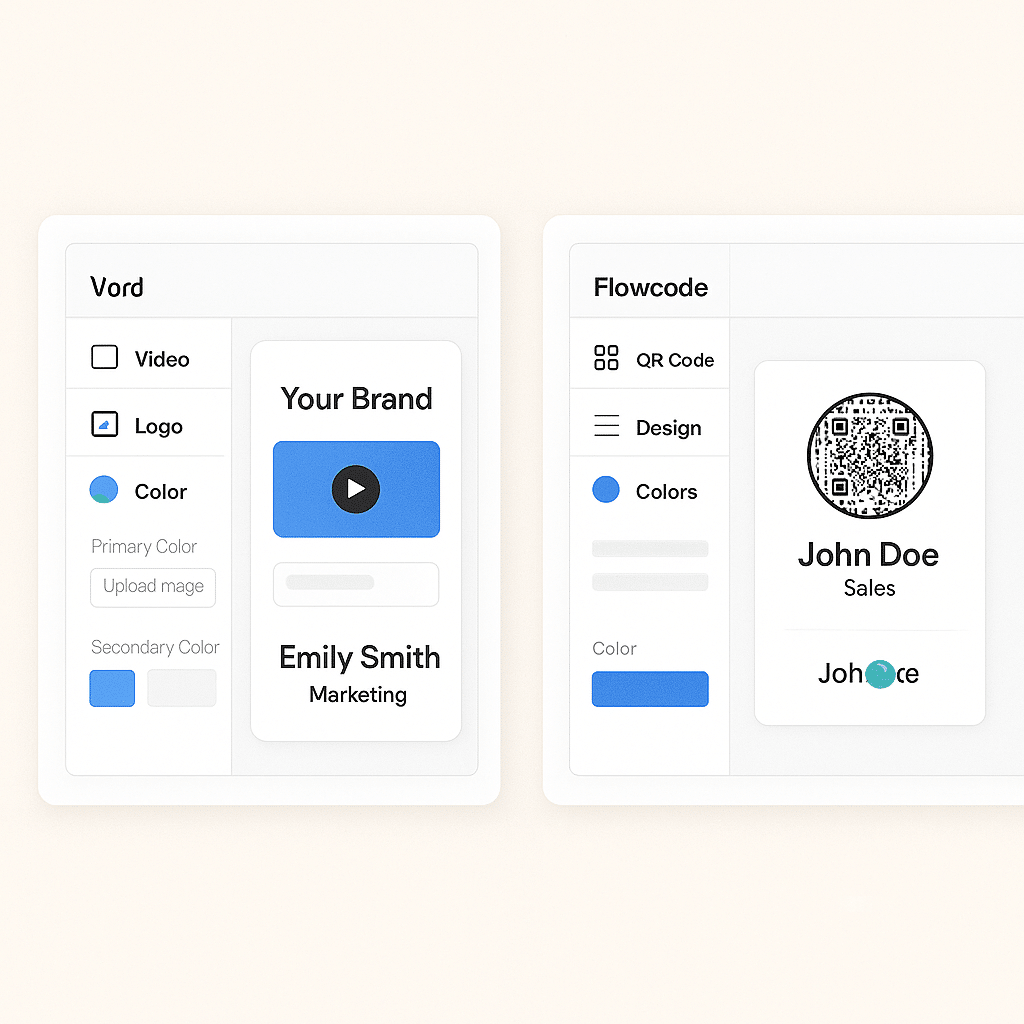
If your organization wants total creative control, Popl offers robust customization tools and various card templates . You can adjust:
Colors & fonts
Profile layout
Embedded videos
Call-to-action buttons
Branded NFC cards with your company logo
Flowcode, while elegant, is more QR-focused. Its customization is limited to color schemes and linking destinations. You cannot deeply modify a business card layout like Popl offers.
✅ Winner: Popl (for full customization flexibility), and it includes a business card scanner feature.
Mobile App Experience
Both Popl and Flowcode offer smooth app experiences. However:
Popl’s mobile app is available for iOS and Android with full card management features.
Flowcode operates mostly through mobile browsers and native wallet apps.
If you want complete functionality inside a single app, Popl wins again.
✅ Winner: Popl
Analytics and Reporting
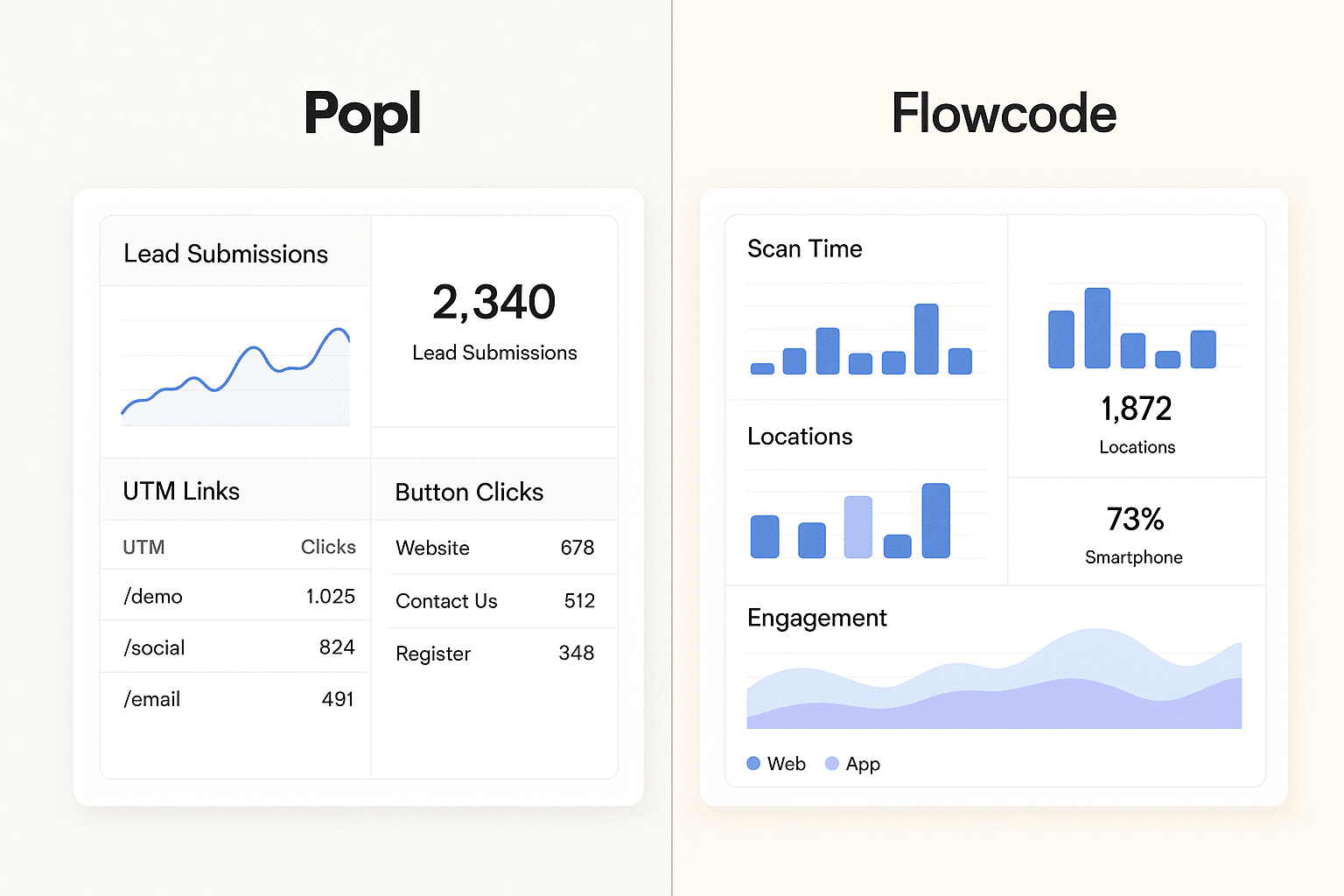
Flowcode shines when it comes to QR scan data, giving you insights like:
Unique visitors
Time of scan
Device type and location
Total engagements
Popl’s analytics are more sales-focused, tracking:
Profile visits
Button clicks
Form submissions
CRM lead tracking via UTM parameters
So, if you’re looking for lead-centric analytics, Popl is ideal. But if your priority is QR scan insights, Flowcode wins.
⚖️ Draw: Depends on what you’re tracking.
Security and Authentication
Popl offers more in terms of enterprise-grade security, including robust access control integrations :
SSO login
Microsoft Azure AD integration
Multi-factor authentication (MFA)
Custom admin dashboards
Flowcode emphasizes user privacy and doesn’t track users across devices, which is ideal for B2C QR campaigns but may limit enterprise-level tracking capabilities.
✅ Winner: Popl (for enterprise-grade access control)
Use Cases and Industry Fit
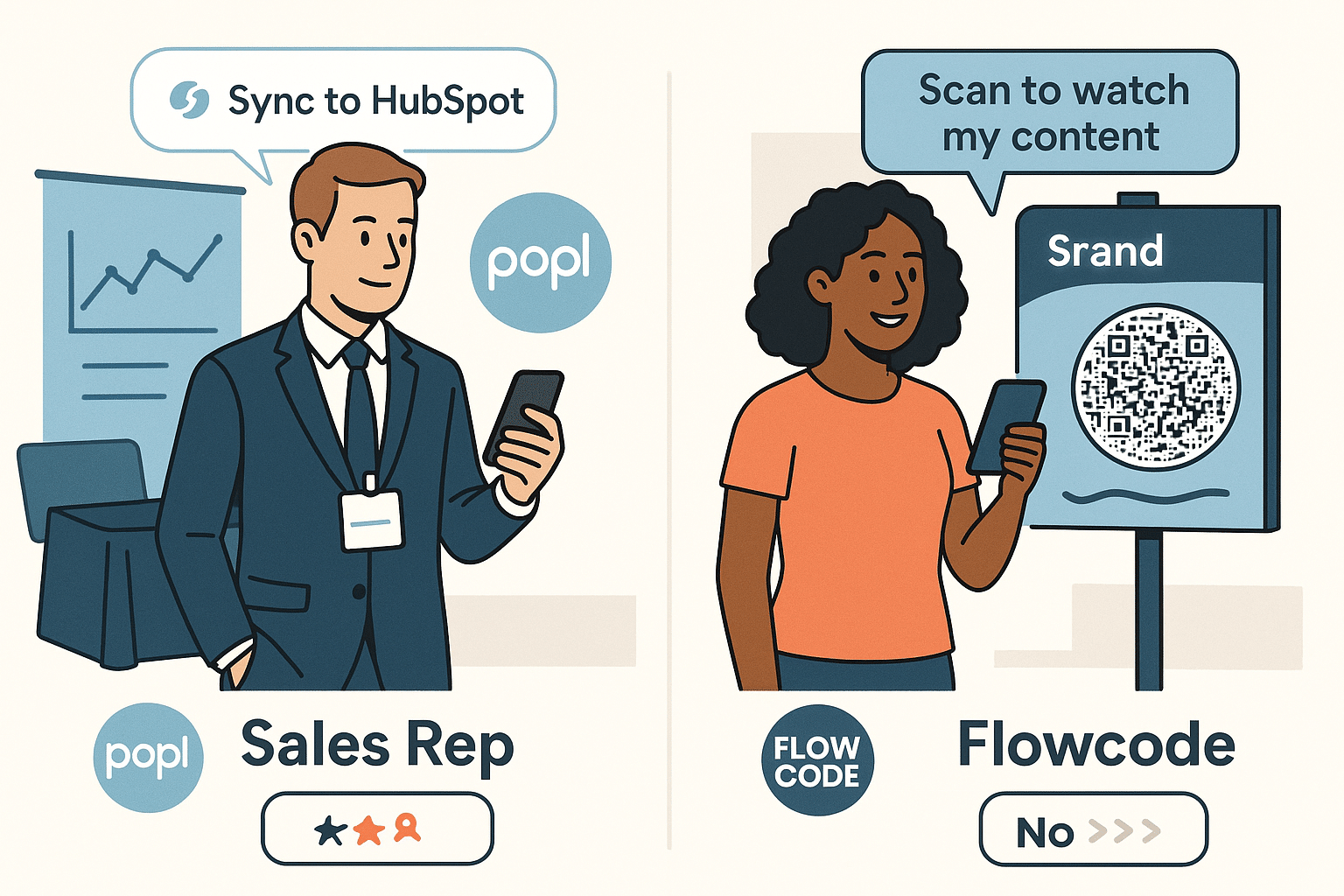
✅ Choose Popl if you:
Are in sales, recruiting, or real estate
Need CRM integrations like Salesforce or HubSpot
Want team management dashboards
Prioritize long-term business development
✅ Choose Flowcode if you:
Run QR-based campaigns or event marketing
Want quick, wallet-ready sharing
Prefer simplicity and low-maintenance cards
Are a content creator, startup, or solo founder
Team Collaboration & Scaling
Popl Teams allows centralized admin control for hundreds of employee cards, ideal for HR and marketing heads. You can:
Bulk-generate cards
Assign/revoke user access
Track individual/team metrics
Integrate team profiles with your website
Flowcode does support enterprise accounts, but it’s more QR marketing focused — less robust for internal business development compared to physical business cards .
✅ Winner: Popl
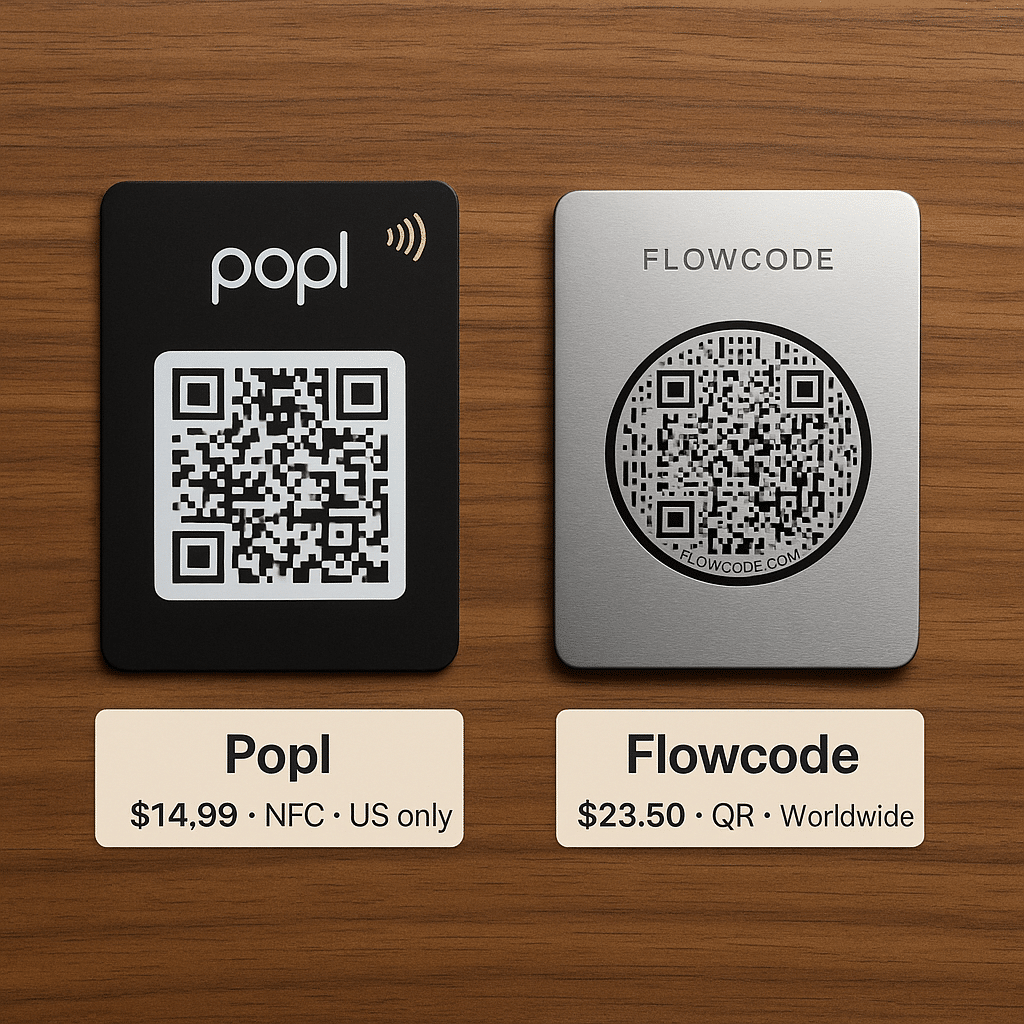
Popl and Flowcode Physical Card Comparison
Both platforms offer NFC-enabled physical cards. Here’s how they differ:
Card Type | Popl | Flowcode |
|---|---|---|
NFC Chip | ✅ Yes, fully supported | ✅ Yes, embedded in Flowcard |
Design | ✅ Multiple templates, logos | ✅ Custom QR on sleek finish |
Price | Starts at $14.99 | Around $20 for custom card |
Delivery | Ships globally | US-focused with select international |
Both options offer high-quality cards. However, Popl provides bulk discounts and corporate bundles, making it ideal for large teams.
Final Thoughts: Which One Is Better?
Choose Popl | Choose Flowcode |
|---|---|
If you want enterprise-level customization | If you want seamless QR and mobile sharing |
Need CRM tools and lead tracking | Prefer a simple, elegant solution |
Want to scale across large teams | Need quick deployment for B2C marketing |
Value control over every aspect of the card | Don’t want to manage complex platforms |
Conclusion
Whether you’re focused on high-end enterprise networking or want a minimalist, mobile-first digital card, both Popl and Flowcode offer reliable and innovative solutions. However, your goals, industry, and scale will determine which platform fits you best.
👉 If you want a feature-rich, CRM-integrated, highly customizable solution — go with Popl.
👉 If you prefer a quick setup, mobile-ready, QR-first card — Flowcode is your friend.
Both platforms are strong in their own ways. Explore their free plans today and start building your smarter business card solution.
